Aerobic Septic System Costs vs. Conventional: What Hesperia Owners Really Pay
Search for aerobic septic system costs and you will find prices that look nothing like a normal septic tank pumping bill. That gap is real. An aerobic system adds electricity, moving parts, and required service visits on top of everything a conventional gravity system already needs. Before you buy a home with one, or replace a failing tank, you should see the full cost picture side by side.
This comparison lays out what conventional and aerobic systems actually cost to own, not just to install. If you are the kind of homeowner who plans pumping ahead instead of waiting for a backup, this is the math worth doing once so the next quote you get makes sense.
The Two Systems in Plain Terms
A conventional septic system has two main components: the septic tank and the drain field, according to the U.S. Environmental Protection Agency. Wastewater settles in the tank, and the clarified liquid flows out through perforated pipes into the soil. Gravity does most of the work. There are no motors, no air pumps, and usually no electrical parts at all.
An aerobic system, sometimes called an aerobic treatment system, adds a mechanical step. Air is pumped into a treatment chamber so oxygen-loving bacteria break down waste faster and more completely. A typical setup moves wastewater through several stages: a primary or trash tank, an aeration chamber, a clarifier, and a pump tank that pushes treated water out. Some designs add a chlorination step before discharge.
That extra treatment is the whole point of an aerobic system. It is also the whole reason aerobic septic system costs run higher, both on day one and every year after.
What Drives the Cost of an Aerobic Septic System
The purchase price is where the gap shows first. A conventional system is a tank, a drain field, and excavation. An aerobic system includes all of that plus an air compressor, internal pumps, float switches, electrical wiring to the tank, and often an alarm panel.
To keep the comparison honest, here is how the installed cost typically breaks down for each:
- Conventional system: the tank itself, a plumbing permit, drain field materials such as chambers, pipe, a junction box, clean-outs, and risers, plus equipment rental and fuel for the dig.
- Aerobic system: everything above, plus the aeration equipment, discharge pump, electrical hookup, control panel, and in some configurations a chlorinator and extra tank compartments.
Site conditions move both numbers. A lot with gentle slope, decent soil, shallow digging depth, and no rock costs less to work on than one that needs deep excavation or rock removal. In the High Desert around Hesperia, soil and lot conditions vary from street to street, which is one reason two neighbors can get different quotes for similar systems.
Material choice matters too. Concrete tanks are common here, and concrete can cost substantially less than a poly tank of the same size. Tank shapes and configurations also vary by region; some areas use rectangular concrete tanks while others use circular tanks, according to the International Code Council.
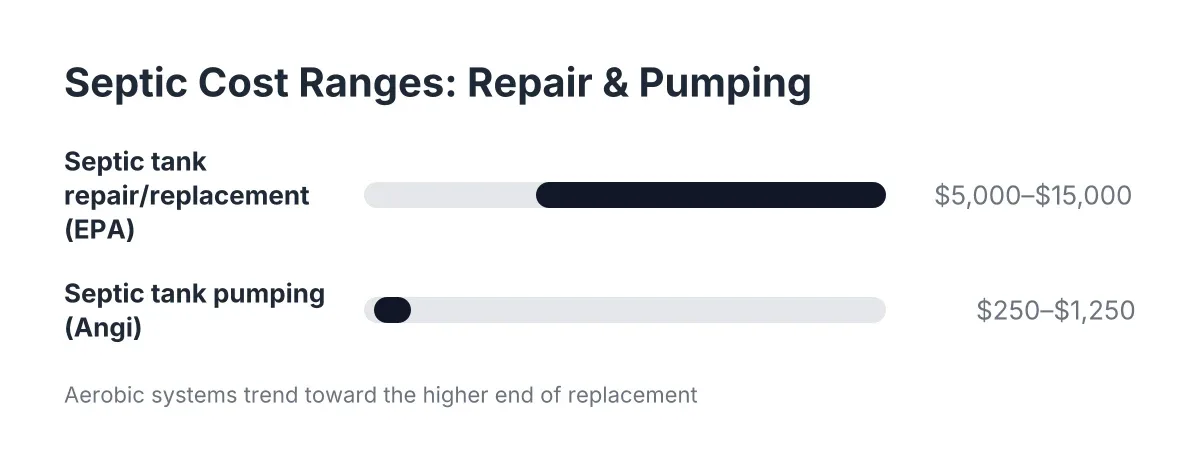
For scale on what is at stake, the EPA estimates septic tank repair or replacement typically costs between $5,000 and $15,000, far more than routine pumping, according to the U.S. Environmental Protection Agency. Aerobic systems generally land at the higher end of replacement scenarios because of the added equipment.
Ongoing Aerobic Septic System Costs Most Quotes Leave Out
Aerobic septic system costs do not stop at installation. The ongoing side includes electricity to run the air pump around the clock, periodic replacement of that pump, filter cleaning, chlorine tablets on systems that disinfect, and service contracts where local rules require them. A full-service visit on an aerobic system can include pumping, replacing a failed pump, replacing lines, and cleaning filters, which together cost far more than a simple pump-out.
Inspection frequency is different too. Alternative septic systems with electrical float switches, pumps, or mechanical components should generally be inspected once a year, according to the U.S. Environmental Protection Agency. A conventional household system needs a professional inspection at least once every three years, per the same agency. That difference alone triples the inspection line on your maintenance budget.
Here is an illustrative scenario. Say a Hesperia homeowner budgets for a conventional system: one pumping visit every few years plus an inspection every third year. Now suppose the same homeowner owned an aerobic system instead. The budget would need a yearly inspection, electricity for the compressor, a replacement air pump every several years, and pumping on top of that. Same house, same family, noticeably different annual number.
Where the Costs Actually Overlap
Both systems still need septic tank pumping. Solids build up in the primary tank of an aerobic system just as they do in a conventional tank, and no amount of aeration removes the need to haul them away. According to Angi data, septic tank pumping averages $427, ranging from $250 to $1,250 or more depending on tank size and location.
Pumping frequency depends on household size and use, not system type alone. For an active family of four, pumping every two to three years is generally advisable because of higher solids and liquid production, according to Penn State Extension. In both cases, the waste pumped from the tank is trucked to a sewage treatment plant for disposal rather than processed on site, per the New Hampshire Department of Environmental Services.
Both systems also share the same failure risk profile in one respect. Unlike a home on municipal sewer, a septic owner carries the full financial liability for a major failure. There is no city budget absorbing the repair. That is true whether the tank behind your house is a simple concrete box or a multi-chamber aerobic unit, and it is the strongest argument for staying on a maintenance schedule with either one.
Side-by-Side: What You Pay and When
Here is the comparison in one place:
- Upfront cost: Conventional is lower; aerobic adds pumps, wiring, and controls.
- Electricity: Conventional uses none in a standard gravity setup; aerobic runs a compressor continuously.
- Inspections: Every three years for a typical conventional system; yearly for systems with pumps and float switches, per U.S. Environmental Protection Agency guidance.
- Pumping: Required for both on a similar schedule driven by household size.
- Parts that wear out: Few to none on conventional; air pumps, floats, and filters on aerobic.
- Service visits: Occasional for conventional; regular and sometimes mandatory for aerobic.
- Treatment quality: Aerobic treats wastewater more thoroughly, which matters on lots where soil or space cannot support a full conventional drain field.
Read that last line carefully. Aerobic systems exist because some properties cannot make a conventional drain field work. On those lots, the higher aerobic septic system costs are not a choice; they are the price of having a working system at all.
Why Maintenance Changes the Whole Comparison
For a homeowner who already has a conventional system, the cheapest path is almost always keeping it healthy. A well-maintained gravity system can last a long time, and regular pumping is what protects the drain field from the solids that destroy it. Letting a conventional system fail, then being forced into an aerobic replacement, is the most expensive route on this entire page.
This is where the numbers favor the planner. A pumping visit every few years plus a periodic inspection is a small, predictable septic tank cost. A failed drain field is a five-figure project. More than one in five U.S. households depend on individual septic systems or small community cluster systems to treat their wastewater, according to the U.S. Environmental Protection Agency, and the ones who avoid the big bills are usually the ones on a schedule.
Suppose you bought a Hesperia house three years ago and the seller could not tell you when the tank was last pumped. The uncertain move is waiting for a smell or a slow drain. The cheaper move is scheduling a pumping and inspection now, learning what system you actually have, and setting a reminder based on what the crew finds in the tank.
How to Choose
If you are comparing systems for a new build or a replacement, start with the property, not the price list. Soil, lot size, slope, and local requirements decide whether a conventional drain field is even an option. A soil evaluation and a conversation with your local health department will settle that faster than any online estimate, and it is a decision worth professional eyes rather than a guess.
From there, the decision logic is straightforward:
- If your lot supports a conventional system, it will almost always cost less to install and own.
- If your lot cannot support a standard drain field, an aerobic system is the working option, so budget for yearly inspections and equipment upkeep from day one.
- If you already own either type, protect it. Regular septic tank pumping and inspections are the cheapest line item in the whole comparison.
- When you collect quotes, ask each company to itemize pumping, inspection, and any parts separately so you can compare like for like.
Both systems can serve a household well for decades. The difference is not which one works; it is how much attention and money each one asks for along the way. Know that number before you commit, and neither system will surprise you.
If you need your septic tank serviced, Hesperia Septic can help.
Prefer to talk it through? Call (760) 249-7872 — a quick call is usually the fastest way to get a straight answer for your situation.