Grease Trap Installation for Residential Kitchens: Requirements and Codes in Hesperia
Most homeowners never think about grease until a drain backs up. If you cook a lot, run a garbage disposal hard, or just bought a High Desert property with a septic system and no records, residential grease trap installation may be worth a serious look. This guide walks through the requirements, the code questions, and the step-by-step process for getting a residential grease trap installed the right way in Hesperia, before grease turns into a backup you pay for twice.
Here is why this matters more than most people realize. According to the U.S. Environmental Protection Agency, grease from restaurants, homes, and industrial sources is the most common cause of reported sewer blockages, responsible for 47% of cases. Homes contribute to that number too, especially homes on septic where every drop of kitchen grease either gets caught or ends up in your tank and pipes.
Grease is a different kind of clog. A paper clog can be punched through with a snake. Grease coats the inside walls of the pipe, cools, and hardens, so the pipe narrows a little more every month until nothing moves. By the time you notice slow drains, the buildup is already there. A trap catches the grease before it reaches the pipe, which is the whole point.
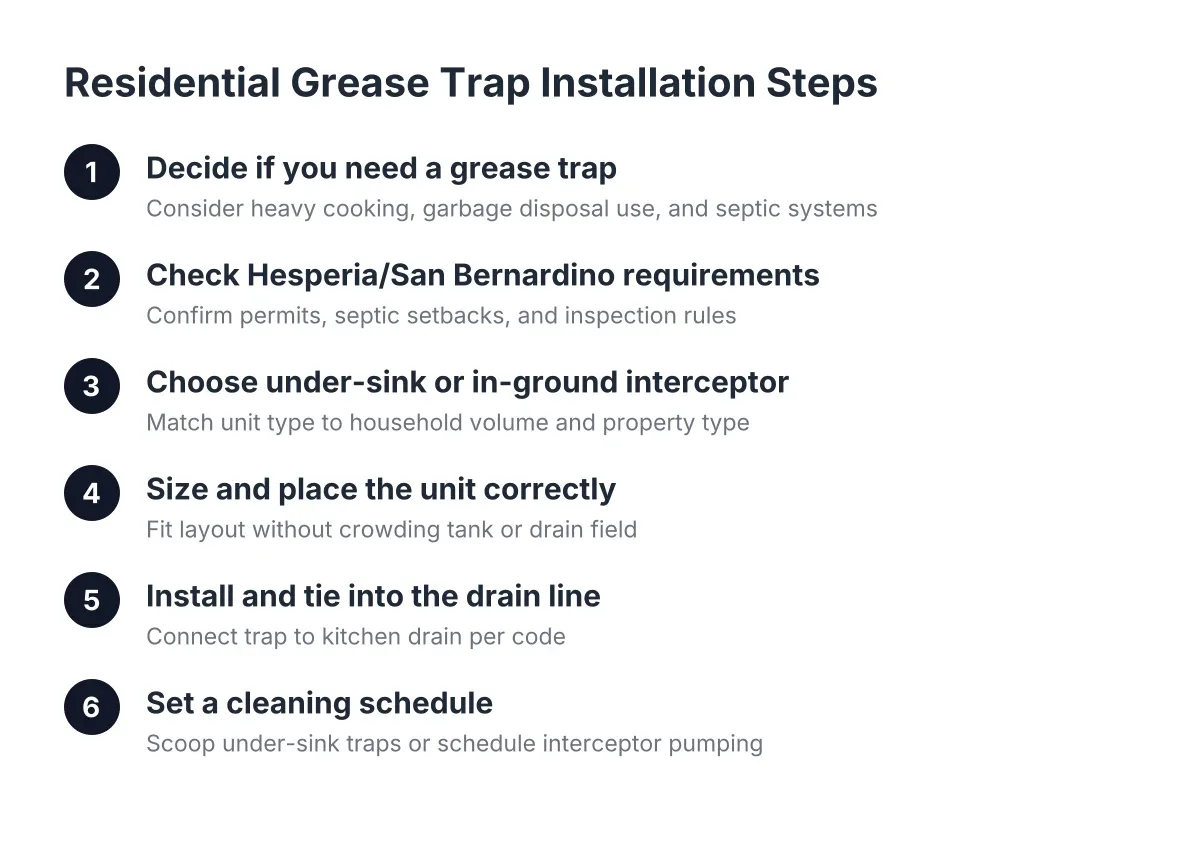
Step 1: Decide Whether Your Home Actually Needs a Grease Trap
Start with an honest look at how your kitchen drains are used. A residential grease trap makes sense for heavy-cooking households, homes with garbage disposals that see daily use, properties on septic systems, and rural lots where a drain line repair means excavation instead of a quick street-side fix.
The septic connection is the big one in Hesperia. The EPA estimates that about 20 percent of U.S. households rely on onsite wastewater treatment systems, and out here that number runs higher. On a septic system, grease does not disappear down the drain. It floats to the top of your tank as scum, and enough of it can block the inlet baffle or migrate toward the drain field, where it causes expensive damage.
Garbage disposals make it worse. The Massachusetts Department of Environmental Protection recommends annual pumping for households with garbage disposals regardless of tank size, because disposals push far more solids and grease into the system. Households that keep grease out of their drains tend to build little or no floating scum layer, which stretches the time between pump-outs. A trap is one way to get there without changing how you cook.
If you rinse pans with a quick wipe first, rarely fry, and your septic inspections come back clean, you may not need one. Skip to maintenance habits instead and save the money.
Step 2: Residential Grease Trap Installation Requirements in Hesperia and San Bernardino County
Before you buy anything, call the local building department. Grease trap installation for residential properties is not governed the same way everywhere, and in 2026 the plumbing code questions you need answered are specific: whether a permit is required for an under-sink unit, whether an in-ground interceptor needs a plan review, and what the required setbacks are on a septic lot.
A few code principles come up almost everywhere:
- Permits for anything plumbed in. An under-sink trap tied into your drain line usually counts as a plumbing alteration. Unpermitted plumbing work can surface during a sale and stall escrow, which matters if you plan to sell.
- Septic setbacks. Most local regulations require a minimum distance of 10 feet between a septic system and the building it serves, according to the Minnesota Pollution Control Agency, and similar separation rules apply broadly. An outdoor interceptor has to fit into that layout without crowding the tank or drain field.
- Inspection after installation. For in-ground work near a septic system, local health department sign-off is commonly part of the process, the same way the Caroline County Health Department notes an inspection follows a perc test during septic installation.
This step matters even more if you are the buyer with no records. Suppose you just closed on five acres off Ranchero Road, the seller left no paperwork, and you cannot find a septic lid anywhere on the lot. Adding a grease trap before you know where the tank, baffles, and drain field sit is guesswork. A septic tank locating service and a basic inspection should come first, so you know what the trap is protecting and where the lines actually run.
Step 3: Choose Between an Under-Sink Grease Trap and an In-Ground Interceptor
For most homes, the choice comes down to two options, and the right one depends on volume.
An under-sink grease trap is a small steel or plastic box that sits in the cabinet below the kitchen sink. Water flows in, slows down, grease floats and stays behind, and cleaner water exits to the drain. These handle typical household volume, and you clean them yourself by scooping out the trapped grease and bagging it for the trash. Grease belongs in the trash, never back down a drain or into the septic tank.
An in-ground grease interceptor is the larger outdoor version, buried between the kitchen line and the septic tank. These are standard for restaurants and commercial kitchens, and a residential version only makes sense for unusual situations: a large household, a property with a commercial-style kitchen, or a small operation like a home-based food business. Interceptors hold far more grease, but they require excavation, careful placement relative to the septic system, and periodic grease interceptor pumping by a service truck rather than a kitchen scoop.
To put the commercial scale in perspective, Wastewater Digest reports a single restaurant can release between 800 and 17,000 pounds of grease into the sewer each year. Your kitchen is nowhere near that, which is why the under-sink unit is the right choice for the large majority of homes.
Step 4: Size and Place the Unit Correctly
An undersized trap fills fast and starts passing grease straight through, which defeats the purpose. Sizing is based on the flow rate of the fixtures draining into it, usually just the kitchen sink and dishwasher line in a home. The manufacturer's flow rating has to meet or exceed what your fixtures can push; your plumber or the building department can confirm the match for permit purposes.
Placement rules are simple but strict. The trap goes on the kitchen drain line only. Bathroom and laundry lines bypass it, because soap and lint foul a grease trap without benefit. It must sit downstream of the sink and upstream of the septic connection, and it needs clear access for cleaning. A trap buried behind stored cleaning supplies in a deep cabinet gets ignored, and an ignored trap is worse than no trap because it eventually clogs itself.
For in-ground units, placement also has to respect the septic layout you confirmed in Step 2. This is where the no-records buyer gets burned. Say a hypothetical buyer trenches for an interceptor line and cuts through an unmarked drain field lateral; that mistake can cost more than the entire trap project. Locate and mark the system before anyone digs.
Step 5: Install the Trap and Tie It Into the Drain Line
For an under-sink unit, a typical installation runs in this order:
- Shut off water to the sink and clear the cabinet.
- Cut the existing drain line between the sink trap and the wall connection.
- Set the grease trap level on the cabinet floor; an unlevel trap separates grease poorly.
- Connect the inlet from the sink and the outlet to the drain line, with a flow-control fitting if the unit requires one.
- Run hot water and check every joint for leaks.
A handy homeowner can manage an under-sink unit, but there is a real trade-off. If the local permit requires licensed work, or if the tie-in involves modifying vented drain lines, bring in a plumber. In-ground interceptors are not a DIY project at all; excavation near a septic system, depth and slope requirements, and the inspection sign-off all call for a professional. Getting it wrong risks the septic system the trap was supposed to protect.
Step 6: Set a Cleaning Schedule Before You Forget the Trap Exists
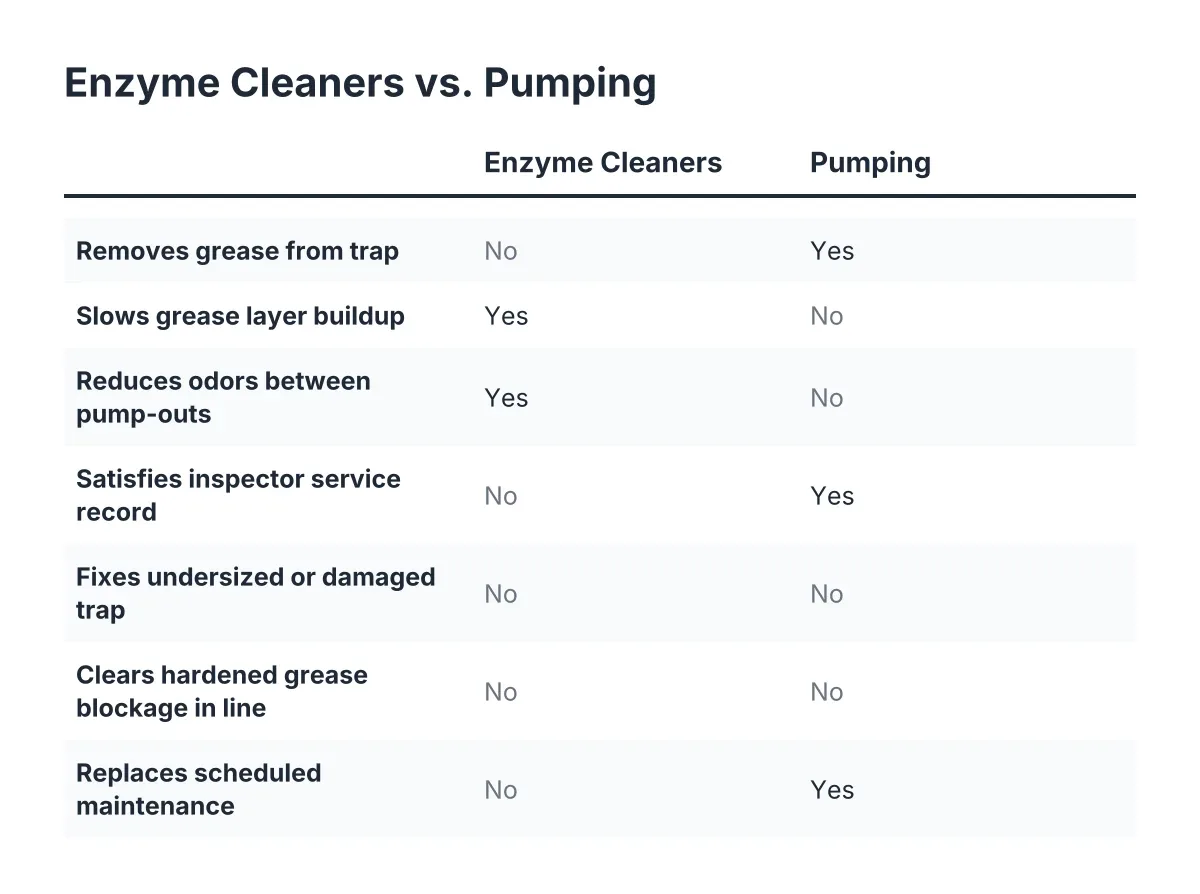
A grease trap only works until it fills. Under-sink units need cleaning on a regular cycle, often monthly for a busy kitchen, and the schedule depends on how much you cook. Open it, scoop the grease layer into a sealed bag, trash it, and close it back up. The same rule applies inside a septic tank; floating globs of kitchen grease found during an inspection should be removed and trashed, not left to migrate.
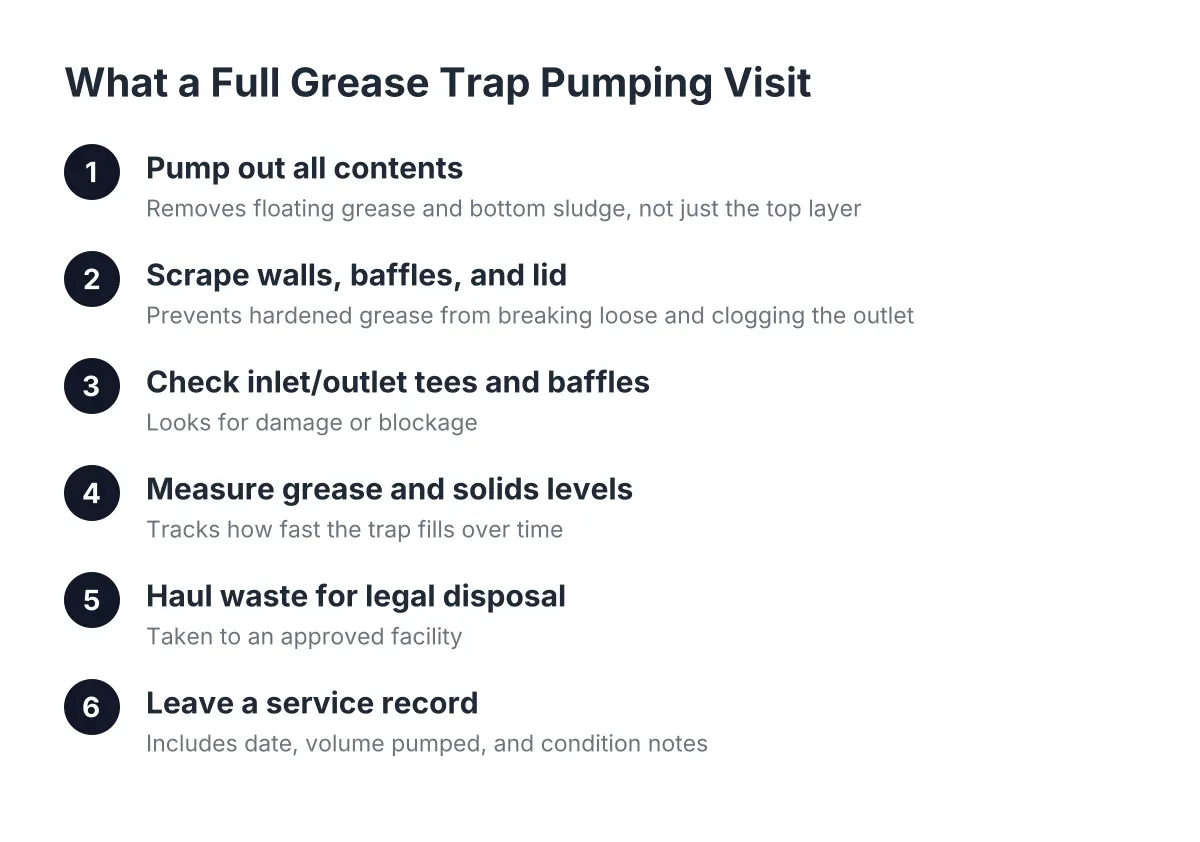
In-ground interceptors need scheduled grease trap pumping by a truck, the same service restaurants rely on for restaurant grease trap pumping on monthly or quarterly contracts. In Hesperia, the crews that handle septic tank pumping typically handle grease traps too, since the equipment and the work overlap. If a grease problem has already reached your septic tank, pumping the tank and clearing the inlet baffle comes first; a jetting tool that cleans the full pipe wall beats a small auger for grease, because punching a hole through a grease clog just invites it back.
What This Means If You Just Bought Property With No Records
For the buyer staring at a lot with no septic paperwork, the order of operations is the takeaway. First, get the septic tank located and marked. Next, get an inspection and a written report so you know the tank, baffles, and drain field condition. Then decide whether a grease trap installation on this residential system is a smart addition or an unnecessary expense.
If the inspection finds a thick scum layer and grease at the inlet, the previous owners probably poured grease down the drain for years, and a trap plus a pump-out protects your new investment. If the system is clean, good habits may be all you need. Either way, you make the call with real information instead of a seller's shrug, and that is worth more than the trap itself.
If you need your septic tank serviced, Hesperia Septic can help.
Prefer to talk it through? Call (760) 249-7872 — a quick call is usually the fastest way to get a straight answer for your situation.