DIY RV Tank Pumping: Portable Waste Disposal Options for High Desert Travelers
If you own an RV, a remote cabin, or a patch of High Desert land with a holding tank on it, sooner or later the tank fills up and you have a choice to make. You can handle DIY RV tank dumping yourself with portable equipment, or you can call a mobile pump-out service that comes to you. Both work. Both have real trade-offs in cost, mess, and legality. This guide walks through the DIY route step by step, exploring portable RV tank dumping options, then shows you where the line sits between a job you can do yourself and one that belongs to a local septic crew with a vacuum truck.
This matters most in places like Hesperia and the surrounding High Desert, where dump stations are spread thin and some properties sit far enough out that many crews skip them. Knowing both options before your black tank hits full is the whole game.
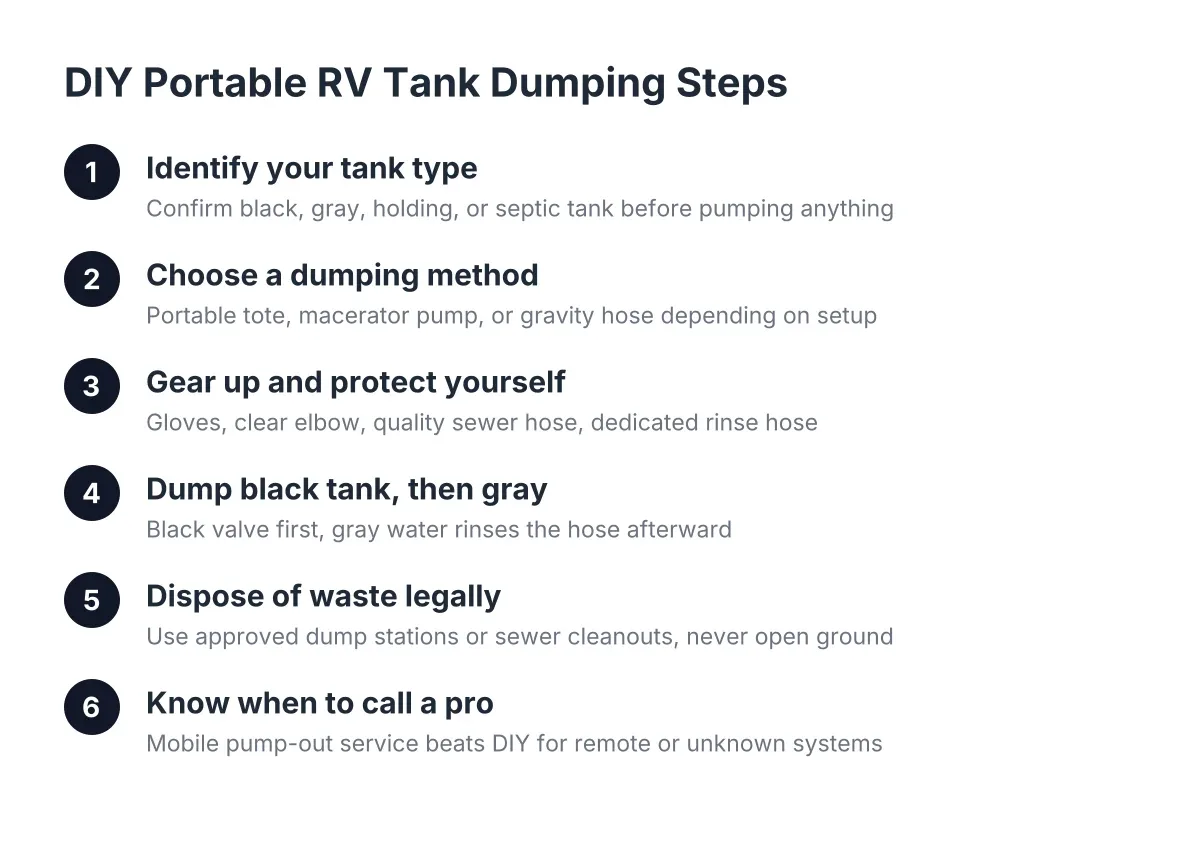
Step 1: Figure Out What Kind of Tank You Actually Have
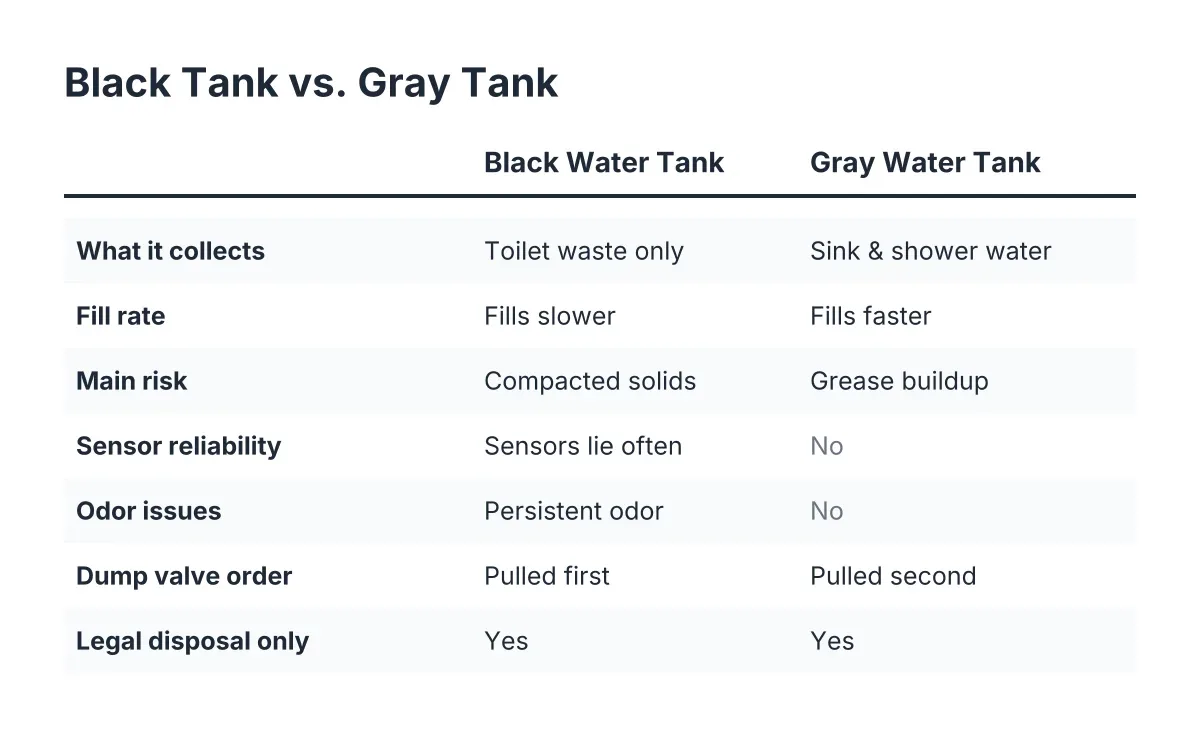
Before you buy any equipment, confirm what you are dealing with. An RV has a black tank for toilet waste and a gray tank for sink and shower water. A cabin or a piece of raw land might have a standalone holding tank, a true septic tank with a drain field, or nothing at all.
This step trips up land buyers more than anyone else. Suppose you just bought two acres outside Hesperia with an old travel trailer parked on it and no records from the seller. You do not know if that pipe in the ground leads to a holding tank, a buried septic tank, or a straight illegal discharge. In that scenario, a septic tank locating service and inspection is worth the money before you pump anything, because pumping the wrong system the wrong way can damage it or put you on the wrong side of county rules.
If you have a standard RV with labeled valves, you can move to Step 2. If you have an unknown buried tank, stop and get it located and inspected first.
Step 2: Portable RV Tank Dumping Methods Explained
DIY portable RV tank dumping comes down to three portable options, each suited to a different situation. Here is how they compare:
- Portable tote tank. A wheeled plastic tank, usually 15 to 40 gallons, that you fill from your RV's outlet and tow slowly to a dump station. Cheapest option, no power needed, but heavy when full and slow if your black tank is bigger than the tote.
- Macerator pump. An electric pump that grinds waste into slurry and pushes it through a small-diameter hose, sometimes 100 feet or more, uphill if needed. Ideal when your RV parks far from a cleanout or dump point. Costs more, needs 12-volt power, and clogs if the tank holds wipes or other trash.
- Gravity dump with a sewer hose. The classic 3-inch hose straight into a dump station or an approved home septic cleanout. Free beyond the hose itself, but only works when the RV can park right at the connection and the outlet sits higher than the inlet.
Match the method to your setup. A weekend traveler who passes a dump station on the way home needs nothing more than a good sewer hose. A cabin owner parking a trailer 80 feet from a septic cleanout is a macerator candidate. Someone boondocking on their own High Desert land with no legal dump point nearby should skip to Step 6, because none of these methods solve the disposal problem.
Step 3: Gear Up and Protect Yourself
However you dump, the supply list is short and the same mistakes cause most of the mess. Wear disposable nitrile gloves. Keep a dedicated bin for sewer gear so hoses never mix with fresh water equipment.
You will want:
- Clear elbow fitting, so you can see when the flow runs clean
- Quality sewer hose with locking bayonet fittings, not a bargain hose that splits
- Separate garden-style hose for tank rinsing, clearly marked, never used for drinking water
- Gloves, paper towels, and a small spray sanitizer for fittings
Skipping the clear elbow is the most common rookie mistake. Without it, you are guessing when the tank is empty, and guessing usually means leaving solids behind.
Step 4: Dump the Black Tank First, Then the Gray
Always empty the black tank before the gray tank. The gray water, which is mostly soapy sink and shower water, then rinses your hose and fittings on its way out.
Connect the hose, check both ends are locked, and open the black valve fully. Let it drain until the clear elbow shows the flow slowing, then close it. Next, open the gray valve and let it flush the line. If your rig has a built-in tank flush, run it now; if not, a rinse wand down the toilet helps knock loose the solids stuck to the tank floor.
Solids are the whole problem in any waste tank. Material that never breaks down, like wipes, paper towels, and feminine products, is what jams hoses and pumps. This is true whether the pump is your $200 macerator or a professional vacuum truck. What you flush decides how hard every future pump-out will be.
Step 5: Dispose of the Waste Legally
This is where portable RV tank dumping gets less convenient than it looks on YouTube. Black tank waste is sewage, and it must go to an approved point: a public dump station, a sewer cleanout on a property connected to city sewer, or in some cases a properly functioning septic system with the owner's permission and local rules allowing it.
Do not dump on open ground, into a dry wash, or down a storm drain. Even gray water has rules; for example, spraying graywater through sprinklers is not a legal disposal method under standard graywater regulations, according to the Arizona Department of Environmental Quality. California and San Bernardino County have their own requirements, so verify local rules before treating your land as a disposal site.
Also think twice before dumping into an unknown septic tank on a property you just bought. A large slug of RV waste into a tank that has not been pumped in years can push solids into the drain field, and the EPA estimates septic repair or replacement typically costs between $5,000 and $15,000. That is an expensive shortcut.
Step 6: Know When Mobile Pump-Out Service Beats DIY
Mobile RV tank pumping means a truck with a vacuum pump and storage tank comes to your rig, cabin, or campground and hauls the waste to a treatment facility. Waste pumped this way is trucked to a sewage treatment plant for disposal, according to the New Hampshire Department of Environmental Services, which takes the legality question off your plate entirely.
Call a pro instead of doing it yourself when:
- Your rig or cabin sits on remote land with no legal dump point within reasonable towing distance
- You run a campground or host multiple rigs, where holding tank service on a schedule beats a dozen individual tote trips
- The tank is a large buried holding tank, not a 40-gallon RV tank, and portable gear cannot move that volume
- You have a backup, a stuck valve, or suspected damage, where forcing a DIY dump can make things worse
- You physically cannot wrestle a 300-pound full tote tank, which is a legitimate reason, not a failure
As a rough illustration, say a cabin owner near Hesperia has a 250-gallon holding tank and the nearest dump station is 25 miles away. Hauling that out in a 30-gallon tote means eight-plus round trips. One visit from a mobile rv pumping service near me search solves it in an hour, and many local crews handle RV holding tank pumping alongside residential septic work, so remote properties are not out of range for them.
Step 7: Set a Schedule So This Never Becomes an Emergency
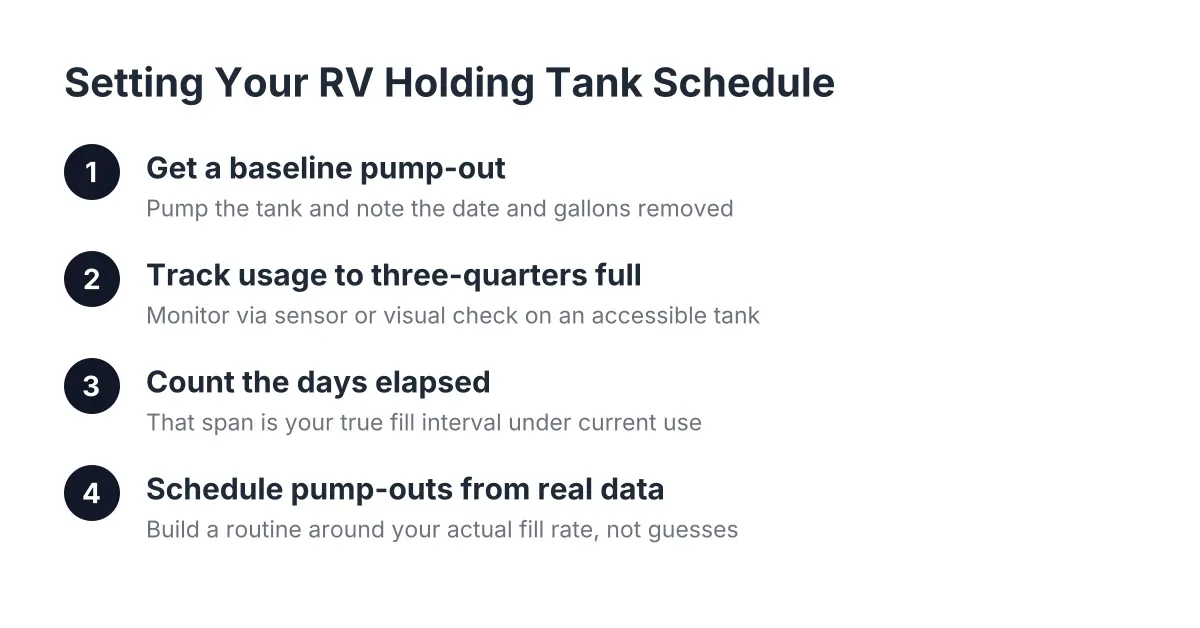
Whichever route you pick, put tank service on a calendar instead of waiting for the gauge, which lies constantly once sensors get coated. Full-time RV living usually means dumping every few days to a week. A cabin holding tank fills on a predictable cycle once you track a season of use.
For a permanent septic system on your property, the same logic applies at a longer interval; Penn State Extension notes that for an active family of four, pumping every two to three years is generally advisable. Regular pumping remains the only proven way to remove accumulated solids. Additives do not replace it, and skipping it is how drain fields die.
Where DIY Ends and a Local Crew Begins
DIY handles the routine well: a healthy RV, a nearby dump station, and an owner willing to do slightly gross work carefully. A tote tank or macerator pays for itself within a season for a frequent traveler. If your macerator setup ages out or the built-in pump on an older rig fails, an rv black water tank replacement or pump swap is a manageable weekend project for a handy owner, though persistent leaks or cracked tanks are worth a professional opinion.
Mobile service wins on volume, distance, legality, and unknowns. If you searched "mobile rv tank pumping service near me" because your tank is full on a remote High Desert parcel, or because you bought land with a mystery tank and zero paperwork, that is exactly the situation a local Hesperia septic crew exists for. They can locate the tank, inspect it, tell you what you actually own, and pump it through proper access instead of guesswork.
The honest summary: learn diy rv tank dumping for the routine dumps, and know a local pump-out crew for everything the portable gear cannot reach. As of 2026, disposal rules keep tightening, so the "dig a hole" era is over. Plan for legal disposal from the start and the tank never runs your trip.
If you need your septic tank serviced, Hesperia Septic can help.
Prefer to talk it through? Call (760) 249-7872 — a quick call is usually the fastest way to get a straight answer for your situation.