RV Black Water Tank Sensors and Float Switches: What Hesperia, CA RV Owners Should Know
If you run an RV, a remote cabin, or a small campground in the High Desert, your black water tank sensors for RV systems are the only thing standing between you and a nasty surprise. RV black tank sensors tell you when to call for a pump-out. When they read right, you know exactly when the tank is full. When they lie, you find out the hard way, usually on a Friday afternoon when the tank backs up into the shower drain. This guide explains how those sensors and float switches actually work, why they fail, how to test them, and when a stuck reading means you need a mobile pump-out crew instead of another bottle of tank treatment. It is written for RV owners and park operators around Hesperia, CA, where the nearest dump station can be a long drive and plenty of remote properties sit on holding tanks that other crews skip.
Why Tank Sensors Matter More in the High Desert
Out here, you cannot just roll down the street to a dump station. A cabin off a dirt road near Hesperia, CA might be twenty minutes from pavement. An RV parked long-term on a lot in the desert might not move for months. In both cases, the level sensor is your early warning system. If it fails silently, the first sign of a full tank is sewage where sewage should not be.
Sensors matter for another reason in this area. A lot of High Desert properties use holding tanks instead of a full septic system with a drain field. A holding tank has no outlet. Everything that goes in stays in until a truck pumps it out. That makes the level reading the single most important piece of information you have, because there is no safety valve downstream.
For campground and RV park operators, the stakes are higher still. One overflowing tank affects every guest on the property, and odor complaints travel fast. A reliable sensor plus a standing relationship with a local pumping crew is the whole game.
How RV Black Water Tank Sensors Actually Work
Most RV black water tanks use one of two sensing methods: contact probes mounted through the tank wall, or external sensors that read the level through the plastic.
Contact probes are the classic setup. Small metal studs sit at fixed heights inside the tank, usually marked as one third, two thirds, and full on your monitor panel. When liquid touches a probe, it completes a small electrical circuit, and the panel lights up that level. Simple in theory. In practice, these probes sit in the dirtiest environment imaginable, which is why they are the most common failure point in the whole system.
External sensors stick to the outside of the tank and sense the liquid level through the wall. They never touch waste, so they do not foul the way internal probes do. Many RV owners upgrade to external sensors after fighting false readings for a season or two.
Gray tanks and fresh tanks use the same technology, but the black tank is where readings go wrong, because toilet paper and solids cling to probes in ways soapy water does not.
Probes, Floats, and What Each One Tells You
Larger stationary systems work differently from the panel in your RV, and if you own land with an unknown system, this is worth understanding before you buy.
In-ground pump tanks and dosing tanks typically use a set of float switches at different heights, not probes. A common arrangement works like this:
- A low float turns the pump on during normal operation and moves effluent out to the drain field.
- A middle or backup float engages when water use runs high and the first float cannot keep up.
- A high-water alarm float sits near the top and triggers a buzzer or panel light if liquid rises too far, which signals a pump failure or an overloaded system.
Holding tanks without any outlet use a similar float-tree alarm. One float near the top signals a control panel when the tank is close to full and due for pumping. If you are buying rural property and you see a small gray alarm panel on a post or an exterior wall, that is usually the tip-off that a pump tank or holding tank is buried nearby, even when the seller has no records at all.
The U.S. Environmental Protection Agency recommends that alternative septic systems with electrical float switches, pumps, or mechanical components be inspected once a year. That annual check is where a technician confirms each float actually does its job instead of assuming it does.
Why Black Tank Sensors Read Wrong
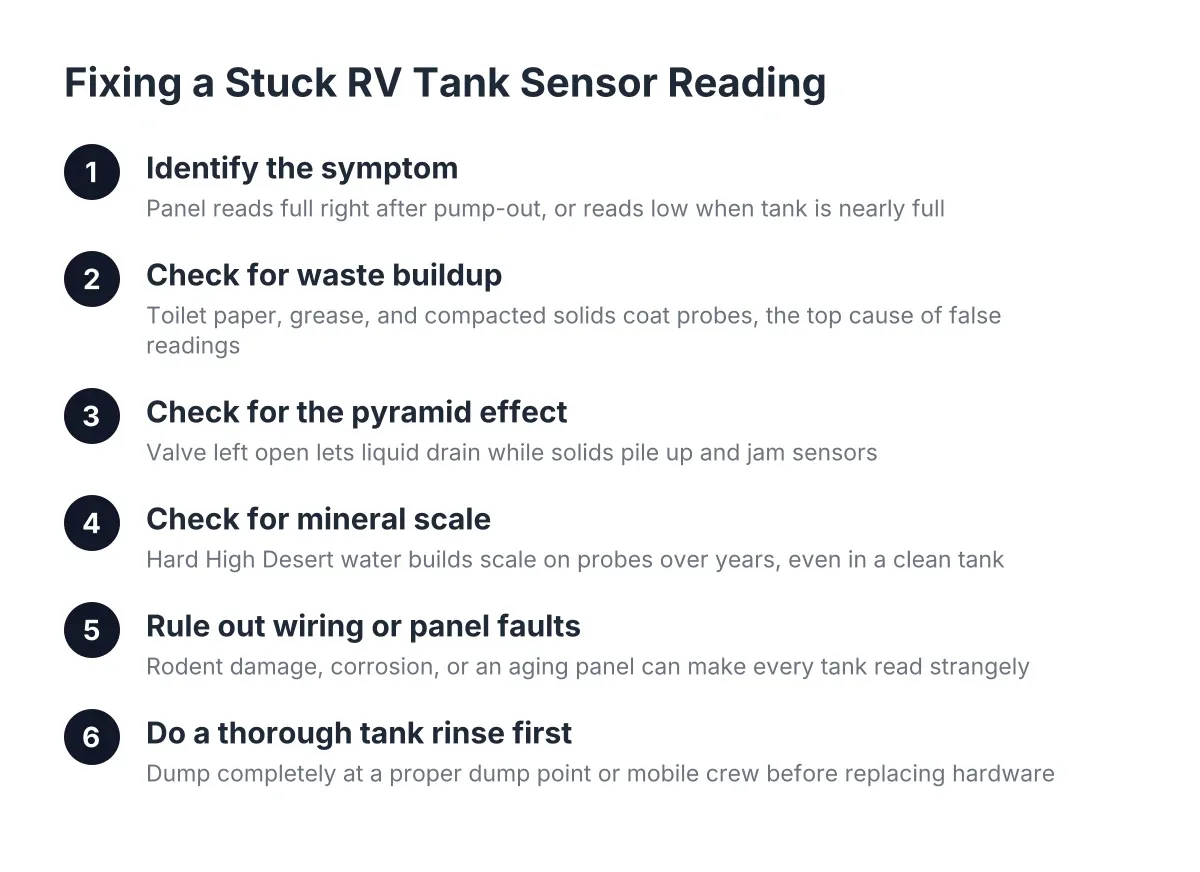
Here is the complaint every RV owner eventually makes: the panel says the tank is full right after a pump-out, or it says one third when the toilet is clearly about to back up. There are a few predictable causes.
First, waste buildup on the probes. Toilet paper, grease from dishwater routed into the wrong tank, and compacted solids coat the metal contacts. A coated probe either reads full constantly or never reads at all. This is the number one cause of false readings, and no amount of staring at the panel fixes it.
Second, the dreaded pyramid. When an RV sits parked with the black tank valve left open, liquid drains off and solids pile up under the toilet. The pile eventually reaches the sensors and jams the readings. This happens constantly with long-term parked rigs in the desert, where an RV becomes a de facto cabin.
Third, mineral scale. High Desert water is hard. Scale builds on probes over time and interferes with the electrical contact, so even a clean tank can read wrong after years of hard-water use.
Fourth, wiring and panel faults. Rodents chew sensor wires, connections corrode, and monitor panels age. If every tank on the panel reads strangely at once, suspect the panel or a ground wire before you blame the tank.
Fixing a Stuck RV Black Water Tank Reading
Start with the cheap fixes before replacing anything. A stuck full reading usually clears with a thorough tank rinse rather than new hardware.
- Dump the tank completely at a proper dump point, or have a mobile crew pump it if the rig cannot move.
- Run a built-in tank flush or a rinse wand through the toilet to knock buildup off the walls and probes.
- Add several gallons of water with an rv black water tank cleaner or a dissolving treatment, then let it slosh during a short drive if the rig is mobile.
- Dump again and check the panel with the tank verified empty.
If the reading is still stuck after a real cleaning, the probes themselves may be scaled beyond recovery, or the wiring has a fault. At that point, many owners skip probe repair entirely and install external stick-on sensors, which cost less than a service call and never foul.
One honest caution: if your rig is parked long-term with a pyramided tank, do not keep flushing water at it and hoping. A badly compacted black tank sometimes needs professional pumping with agitation to break up solids, and in rare cases a valve or tank replacement. The cost of replacing an RV black tank runs far higher than years of routine pump-outs, so it pays to deal with buildup early. If you smell sewage inside the rig even when the panel reads low, stop guessing and get it looked at; a bad reading combined with odor often means the tank is fuller than you think.
When a Full Sensor Means You Need a Mobile Pump-Out
Sensors tell you when to act. In the High Desert, acting often means calling a truck to you instead of driving the tank somewhere.
Consider a hypothetical setup a lot of local readers will recognize. Say an owner keeps a fifth wheel parked on two and a half acres outside Hesperia, CA as a weekend place. The rig has not moved in a year, the tires are questionable, and towing it to a dump station is not realistic. The black tank panel finally reads full after months of weekend use. In that scenario, a mobile RV tank pump-out is the only sensible option: a truck comes to the property, pulls the waste directly from the rig's outlet, and hauls it away. Septic waste pumped from tanks is transported by truck to a sewage treatment plant for disposal, according to New Hampshire Department of Environmental Services, so nothing gets dumped on-site or left behind.
The same logic applies to cabins on holding tanks and to small campgrounds. A park operator with eight occupied spaces cannot ask guests to break camp because the shared holding tank alarm tripped. Recurring scheduled service, timed to how fast the tank actually fills, keeps the alarm from ever sounding in the first place. Most small parks land on a monthly or quarterly schedule once they have a few pump-outs of real data, and RV holding tank pumping on a standing schedule is almost always cheaper per visit than emergency calls.
On cost, be careful with searches for the cheapest RV tank pumping service near me. The low number on a listing often excludes travel to remote properties, and a crew that will not drive a dirt road is worthless at any price. What you actually want is a straight quote that accounts for your location, tank size, and access, before the truck rolls. For a rough frame of reference, Angi data puts the average cost of septic tank pumping at $427, with a range from $250 to $1,250 or more depending on tank size and location; RV tanks are far smaller than residential septic tanks, so mobile RV pump-outs typically land well below residential septic pricing, though remote access adds to the trip.
Buying Land With an Unknown Tank? Check the Floats First
Plenty of buyers in the Hesperia area close on rural property with no septic records, no visible lids, and a seller who shrugs when asked. If that is you, the sensor and float question belongs on your pre-purchase checklist, right next to locating the tank itself.
Here is why. An in-ground septic tank for RV hookups, a pump tank, or a plain holding tank all look identical from the surface: dirt. The difference between them changes your ownership costs completely. A holding tank needs pumping every time it fills, forever. A pump tank with a drain field mostly needs electricity, working floats, and routine pumping every few years. You cannot tell which one you have without opening it up.
A proper locate-and-inspect visit before closing typically covers:
- Locating the buried tank and marking it, even with no records or visible risers.
- Opening the lid and identifying whether it is a septic tank, pump tank, or holding tank.
- Manually testing each float switch with a lifter tool, confirming the pump-on float runs the pump and the high-water float trips the alarm.
- Checking the inlet and outlet baffles, since a clogged inlet baffle is a common cause of backups and one of the first things worth checking, as noted by the Washington State Department of Health.
- A written report you can hand to your lender, the county, or the seller's agent.
Buyers sometimes worry that an inspection delays escrow or wastes money on a property they might walk away from. Flip that thinking. If the inspection turns up a dead pump, a cracked tank, or a holding tank where you expected a full septic system, you just found a negotiating lever worth far more than the inspection cost. If everything checks out, you close with a marked tank location and a known pumping baseline instead of a mystery under the dirt.
Some situations do call for a specialist beyond a pumping crew. If an inspection reveals a failed drain field, structural tank damage, or a system that was never permitted, you will want a septic designer or the county environmental health office involved before you commit money.
Above-Ground Tanks for Campers and Cabins
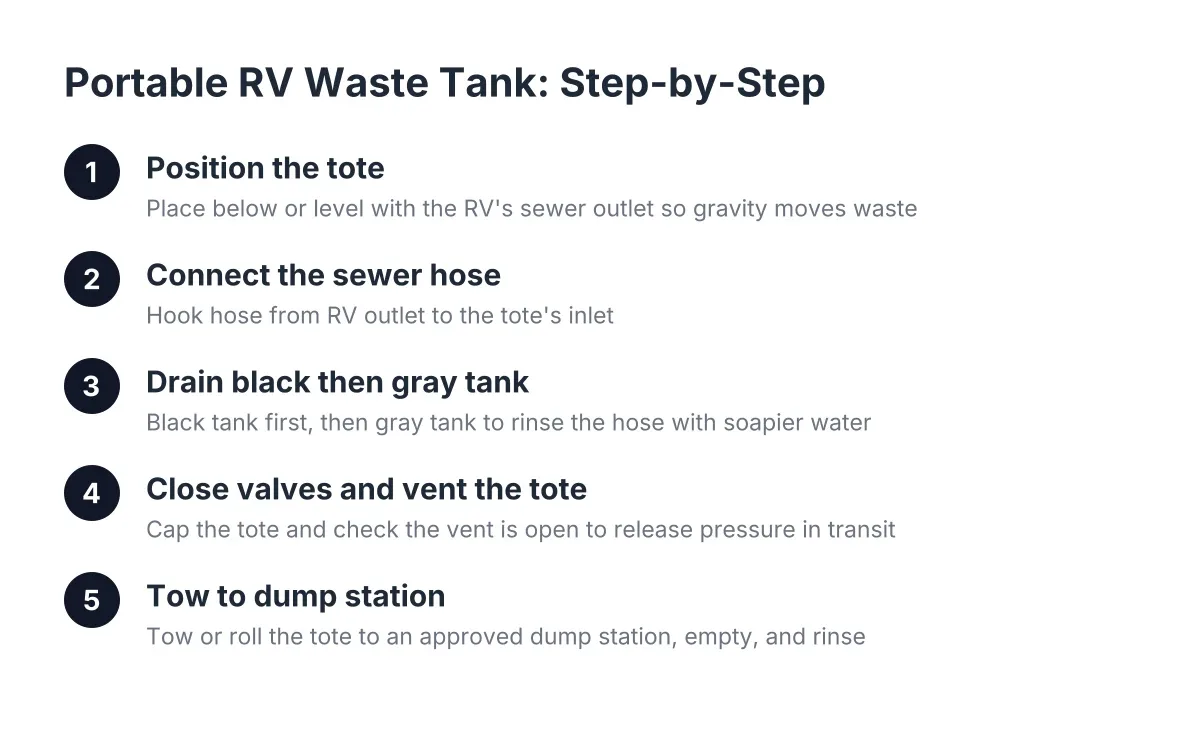
Not every property justifies digging. An above ground septic tank for camper use, usually a portable tote or a fixed poly holding tank, is a common stopgap on raw land while an owner decides whether to build. These setups have no drain field and no treatment; they are pure storage, so the level alarm or a disciplined pumping schedule is non-negotiable.
Two things to know before going this route. First, check with San Bernardino County on what is allowed for long-term waste storage on your parcel, because rules for temporary RV occupancy and holding tanks vary and change. Second, size the tank honestly against your water use. The U.S. Environmental Protection Agency notes that a single leaky or running toilet can push as much as 200 gallons of extra water per day into a system. In an RV or cabin on a small holding tank, one running toilet valve can fill weeks of capacity in a single day, which is exactly the kind of event a working high-level alarm catches before it becomes a mess.
Above-ground tanks also sit in full desert sun. Heat accelerates odor, so plan on regular tank treatment, keep the vent clear, and pump before the hot months rather than after the smell tells you to.
What to Expect From a Local Pump-Out Visit in Hesperia, CA
Knowing the process removes most of the hesitation about calling. A typical mobile pump-out around Hesperia, CA runs like this.
The crew confirms access first: can the truck reach within hose distance of the RV outlet, cabin tank, or buried lid. For a buried holding tank with no visible riser, locating comes first, and a crew that does septic tank locating can find and mark it the same visit. The technician connects to the tank, pumps the contents, and checks that the tank actually empties, which is also the moment to verify your sensors reset to empty. If your panel still reads two thirds with a confirmed empty tank, you have your answer on the sensors, and you learned it at the best possible time.
Waste leaves on the truck for disposal at a treatment facility. You get confirmation of what was pumped, which matters for park operators keeping compliance records and for land buyers building a paper trail on a system with no history.
The pattern that serves High Desert owners best in 2026 is simple: trust your RV black tank sensors only after you have tested them, clean the black tank before readings drift, and line up a local crew that will actually come to your property before the panel hits full. The black tank itself rarely fails; it is the information coming off it, and the plan behind it, that decides whether a full tank is a scheduled appointment or an emergency.
Prefer to talk it through? Call (760) 249-7872 — a quick call is usually the fastest way to get a straight answer for your situation.