Emergency Septic Pumping in Hesperia: When to Call and What to Expect
When sewage backs up into a shower or a tenant calls about a smell in the yard, you need answers fast, not a brochure. This guide covers emergency septic pumping in Hesperia from a practical angle: when a septic problem counts as an emergency, what a crew actually does when they arrive, and how a full septic tank cleaning differs from the basic pump-out most people expect. If you own a home, a rental, or a small commercial property in the High Desert, this is the walkthrough to read before you pick up the phone.
What Counts as a Septic Emergency
A septic emergency is any situation where waste is backing up into the building, surfacing in the yard, or about to do either. That includes sewage coming up through floor drains, tubs, or toilets, standing wastewater over the tank or drain field, and a septic alarm that will not stop. These situations need same-day attention because the damage gets worse by the hour.
Slow drains in one sink are usually a plumbing clog. However, when every drain in the house slows down at the same time, the problem is almost always downstream of the house, in the tank or the line feeding it. That pattern, plus gurgling toilets and a sewage smell indoors or in the yard, points to a full or failing septic tank.
Here are the signs that mean call now rather than wait for a routine appointment:
- Sewage backing up into tubs, showers, or floor drains
- All drains in the building slow or stopped at once
- Wet, soggy, or foul-smelling ground over the tank or drain field
- A septic alarm sounding on a pump system
- Toilets gurgling when you run water elsewhere in the house
- A tenant or employee reporting a sewage odor that was not there last week
For septic-related backups, call a septic service first, not a plumber. A septic crew can open the tank, check the levels, and tell you in minutes whether the tank is full, the inlet is blocked, or the problem sits in the house plumbing. If it turns out to be a plumbing issue, a plumber is the right second call. Starting with a plumber on a full tank often means paying for a drain snake that pushes the problem around without fixing it.
Why Emergency Septic Pumping Calls Happen in Hesperia
Most emergency septic pumping calls in Hesperia trace back to one cause: the tank went too long without service. Sludge settles at the bottom of the tank year after year, and the scum layer thickens at the top. Eventually there is no room left for wastewater to separate, and solids push out toward the drain field or back toward the house.
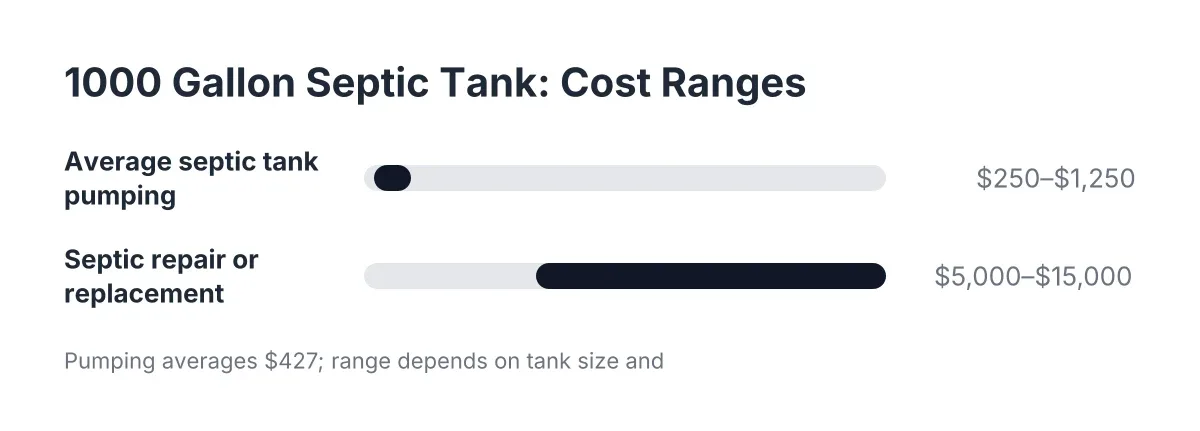
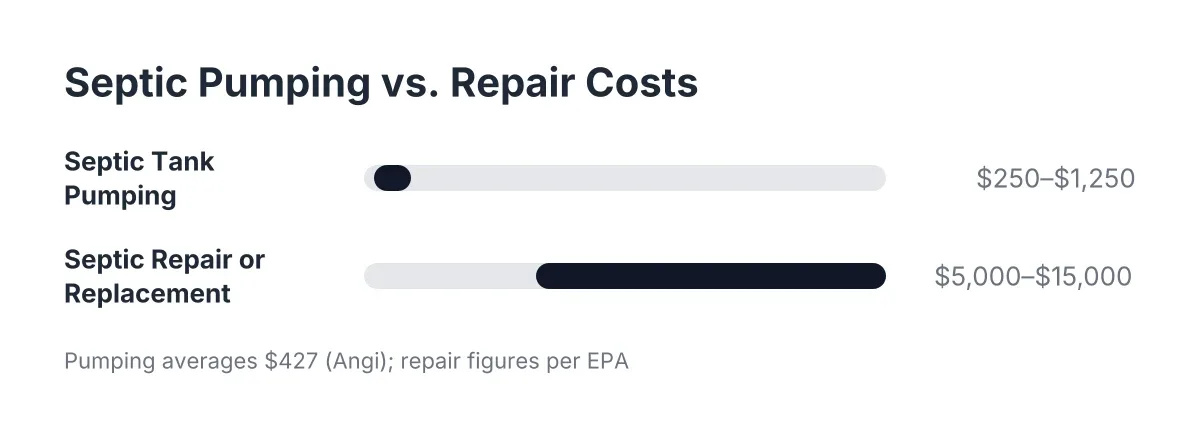
This matters because the fix for a neglected tank is cheap compared to the fix for a neglected drain field. According to Angi data, septic tank pumping averages $427, ranging from $250 to $1,250 or more depending on tank size and location. By contrast, the EPA estimates septic repair or replacement typically costs between $5,000 and $15,000. A backup is miserable, but it is also a warning that routine service can still save the system.
Hesperia and the surrounding High Desert add their own wrinkle. Large parts of the area have no centralized sewer, so homes, rentals, and small commercial properties run on septic. According to the Environmental Finance Center Network, homes in cities typically connect to municipal sewage treatment, while septic tanks serve areas without centralized sewer service. Out here, that means the tank in your yard is the whole treatment plant, and when it fills, there is no city line to take the overflow.
Property owners who bought or inherited a septic property often do not know when the tank was last pumped, or even where it sits. That is common, not a character flaw. A crew that offers septic tank locating can find a buried tank, which matters on older High Desert lots where the lid may sit under decades of sand and landscaping.
What to Expect From an Emergency Septic Pumping Visit
An emergency visit follows the same basic steps as a routine pump-out, just on a compressed timeline and with diagnosis built in. Knowing the sequence helps you judge whether the crew in your driveway is doing the job right.
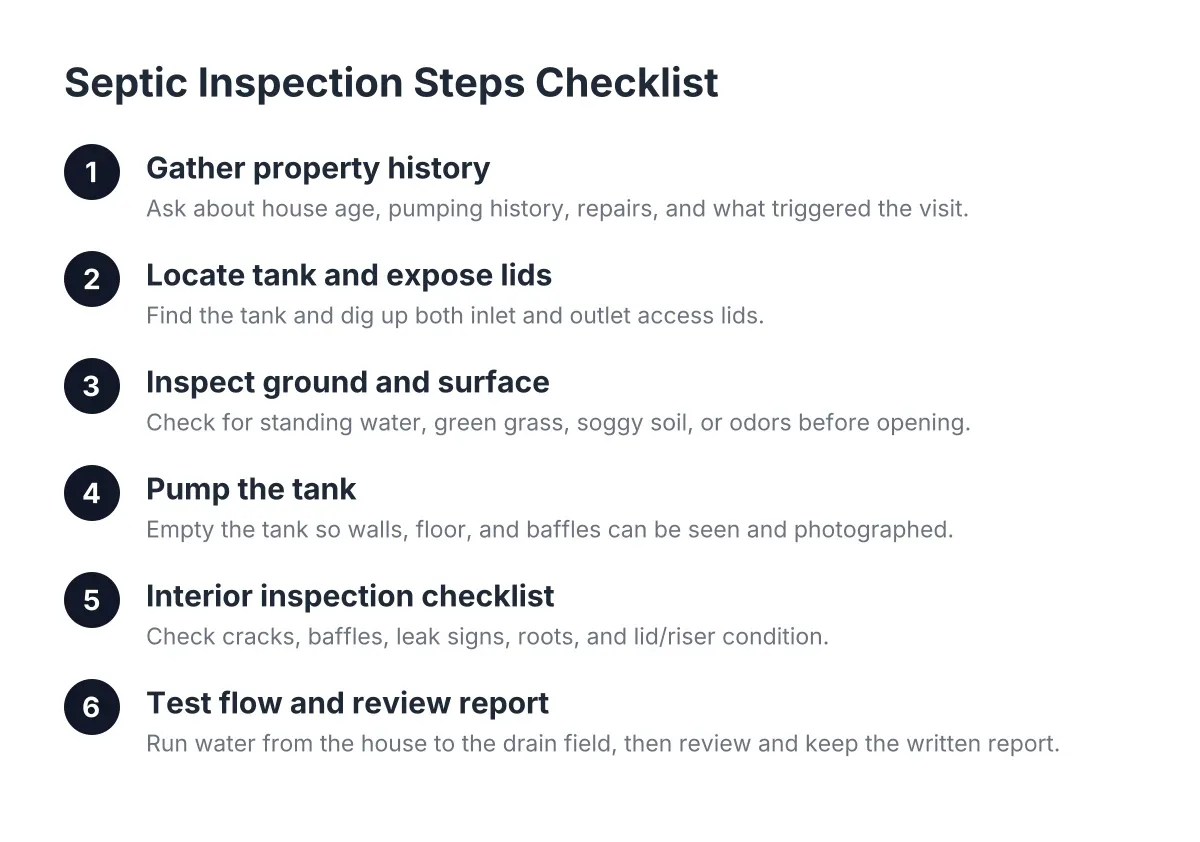
First, the crew locates the tank and uncovers the access lids. If you know where the lids are, say so when you call; it saves time. If not, locating is part of the job on many emergency calls.
Next, they open the tank and read what they see. The liquid level tells the story. A level above the outlet pipe means the drain field is not accepting water or the outlet is blocked. A normal level with a backup in the house points to a clogged inlet line. This two-minute check is the diagnosis most homeowners actually need, and it is why calling a septic crew first beats guessing.
Then the vacuum truck goes to work. The hose pulls out liquid, the settled sludge at the bottom, and the floating scum layer at the top. Removing all three matters, and this is where pumping and full cleaning start to differ, which the next section covers.
Finally, the crew inspects what the empty tank reveals. With the contents gone, they can see the condition of the baffles, check the inlet and outlet, and tell you whether the backup was a one-time capacity problem or a symptom of something bigger. The waste itself leaves the property on the truck; according to the New Hampshire Department of Environmental Services, septic waste pumped from residential tanks is hauled to a sewage treatment plant for disposal, not processed on-site. For a landlord or restaurant operator who needs a paper trail, ask the crew to document the service and disposal; that record is worth keeping for compliance files.
Expect an emergency, same-day pump-out to cost more than the same service scheduled in advance. That premium is normal across the trade. The trade-off is simple: you pay more for speed, but you stop an active backup before it ruins flooring, drywall, or a tenant relationship.
Pumping vs. Full Septic Tank Cleaning: What You Are Paying For
Septic tank pumping removes the liquid and loose solids a vacuum hose can pull on its own. A full septic tank cleaning goes further: the crew breaks up the compacted sludge at the bottom and the hardened scum at the top, often using water from the tank or agitation tools, so the truck removes everything instead of leaving a crust behind. If you are comparing quotes, this is the difference to ask about.
Here is why it matters in an emergency. Suppose a tank has gone eight or ten years without service. The sludge at the bottom has compacted into a dense layer the hose cannot simply sip up. A quick pump-out pulls the liquid, the backup stops, and everyone relaxes. But if half the sludge stays behind, the tank refills its working space fast, and the same emergency comes back months later.
A full cleaning resets the tank to its real capacity. The crew agitates and removes the sludge layer, breaks down the scum mat, and leaves the interior clear enough to inspect the walls and baffles. For a neglected tank, cleaning is usually the right call even though it takes longer and may cost more than a basic pump. For a tank on a regular schedule, a standard pump-out is often enough, because the solids have not had time to compact.
When you call for service, ask these questions to know what you are getting:
- Does the price include removing the sludge and scum layers, or only the liquid?
- Will you inspect the baffles and tank condition once it is empty?
- Do you provide a record of the service and where the waste goes?
A fair quote answers all three without dodging. Be cautious of any price that seems too good, because the usual corner cut is leaving sludge in the tank.
How Fast Emergency Pumping in Hesperia Restores Service
For most backups caused by a full tank, service comes back the same day the tank is pumped. Once the truck removes the sludge, scum, and liquid, the house drains flow again, usually within the hour the crew finishes. The visit itself, from opening the lids to buttoning up, generally runs in the range of one to a few hours depending on tank access and how compacted the contents are; treat that as an illustrative range, since every tank differs.
However, pumping fixes capacity, not every cause. If the open-tank check shows the drain field is waterlogged and refusing water, pumping buys you days or weeks of normal use, not a permanent fix. In that case the honest answer from the crew is that you need an inspection and possibly repair, and no amount of pumping substitutes for that. A drain field diagnosis is a job for a professional; it involves soil behavior and system design that a pump-out alone cannot resolve.
Consider an illustrative scenario a Hesperia landlord would recognize. Say a tenant calls on a Friday afternoon about sewage smell and a slow toilet at a rental on a half-acre lot. The owner lives an hour away and cannot be on-site. A local crew takes the call, gets gate access arranged by phone, locates the tank, pumps it, confirms the drain field still accepts water, and sends the owner photos and a service record. The tenant has working drains by evening, and the owner never left the office. In that scenario, the difference between a crew that communicates remotely and one that requires the owner on-site is the whole value of hiring local.
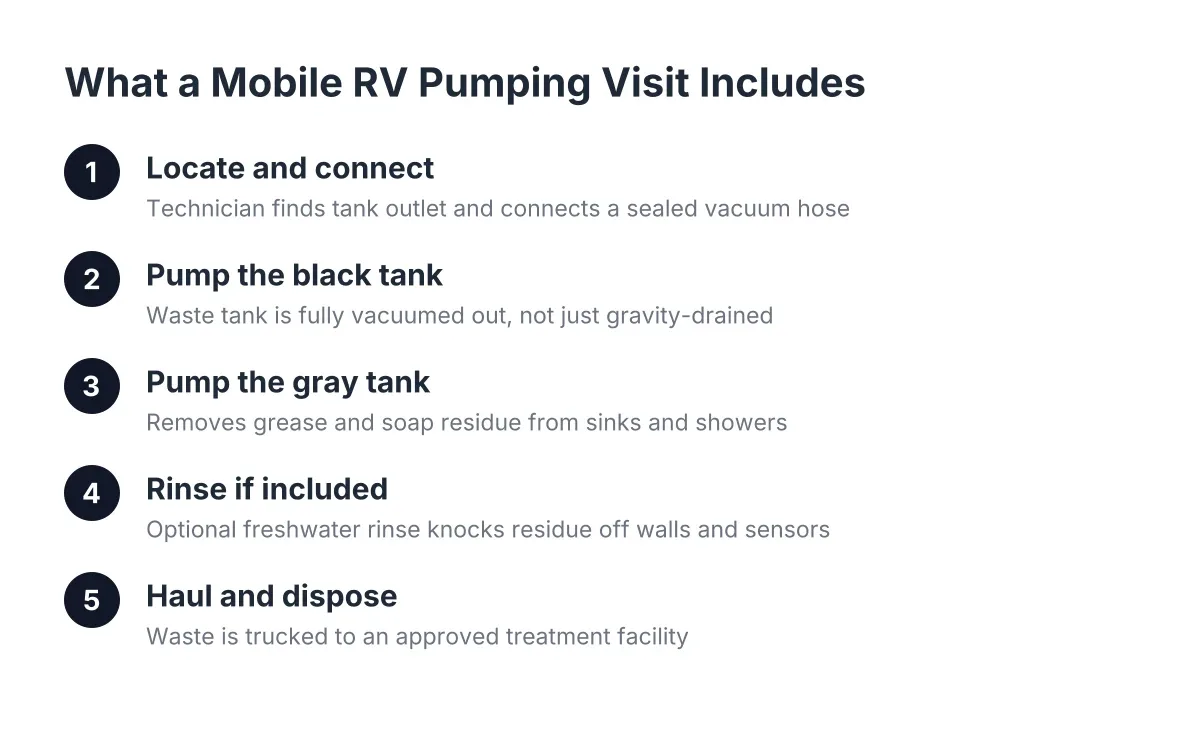
For commercial operators the stakes run through a different channel. A restaurant with a flagged grease trap or an RV park with full holding tanks faces compliance pressure, not just inconvenience. The same vacuum truck and crew that handle residential emergencies typically handle grease trap pumping and RV and holding tank pumping, so one local number can cover all of it. Ask up front whether the company services non-residential tanks; not every outfit does.
Choosing Who to Call for Emergency Septic Service
Choose a septic-focused local crew over a national call center or a multi-trade shop where septic is a sideline. In an emergency, the questions that matter are narrow and practical, and the answers tell you who you are dealing with within one phone call.
Ask these three things:
- Can you come today, and what does emergency service cost compared to a scheduled visit?
- Will you diagnose the cause at the tank, not just pump and leave?
- Do you handle my situation specifically: residential, rental, grease trap, or holding tank?
A good answer is direct on all three. A crew that will open the tank, read the levels, and tell you honestly whether the drain field is the real problem is worth more than the cheapest hose in town. Keep in mind that pumping crews are not automatically installers; according to the New Hampshire Department of Environmental Services, septic installation requires separate certification covering soil types, percolation rates, and system design. If your emergency turns into a replacement conversation, the diagnosis still starts with the pump-out crew, and the install work follows its own permitting path.
Preventing the Next 2 a.m. Backup
The cheapest emergency is the one that never happens, and septic emergencies are mostly preventable with a schedule. The EPA recommends a professional inspection at least every three years for the average household, and once a year for systems with pumps, float switches, or other mechanical parts. For pumping frequency, Penn State Extension notes that an active family of four generally does well pumping every two to three years. Households with garbage disposals produce far more sludge; the Massachusetts Department of Environmental Protection recommends annual pumping for those homes regardless of tank size.
For landlords and small commercial operators, the fix is structural rather than behavioral. Put the property on a recurring service schedule with one local crew so tank service stops being a fire drill triggered by tenant calls or health inspections. One hypothetical example: an owner managing two septic-served rentals in Hesperia sets a standing reminder tied to the pumping records, and the crew services both properties without the owner on-site. The emergencies stop because the sludge never gets the chance to build.
Between services, the rules are simple. Keep grease, wipes, and anything that is not wastewater and toilet paper out of the drains. Watch for the early warning signs listed above, and treat the first slow-drain day as a scheduling prompt, not a wait-and-see situation. As of 2026, routine pumping remains one of the least expensive line items in owning a septic property, and the gap between a scheduled pump-out and a five-figure drain field replacement has only grown.
If you are in Hesperia or the surrounding High Desert and the backup is happening now, a local septic crew can open the tank, pump it, and tell you plainly what caused it. Reach out to a Hesperia septic service to book emergency pumping or to get the property on a schedule that keeps the next emergency off your calendar.
If you need your septic tank serviced, Hesperia Septic can help.
Prefer to talk it through? Call (760) 249-7872 — a quick call is usually the fastest way to get a straight answer for your situation.