Septic Tank Locating Service: Why It Matters Before a Pumping Emergency
A septic tank locating service finds and marks your buried tank before you need it pumped, and that matters more than most property owners realize. When sewage backs up at a rental at 9 p.m. and nobody knows where the tank sits, the crew spends the first hour of an emergency call probing dirt instead of pumping waste. For a landlord in Hesperia with tenants calling about a smell, that lost hour is the difference between a quick pump-out and a long night. This guide walks you through locating your tank now, step by step, so an emergency call goes fast later.
Here is why this deserves an hour of your time. Most emergency backup calls happen because a tank sat unpumped far past its service interval, and by the time drains slow down, the tank is already full. If the crew then has to hunt for the tank, dig it up, and expose the lid before they can even drop a hose, you pay for that time. Many pumping companies charge extra to dig out access. Knowing the location, and ideally having the lid exposed, cuts both the bill and the downtime.
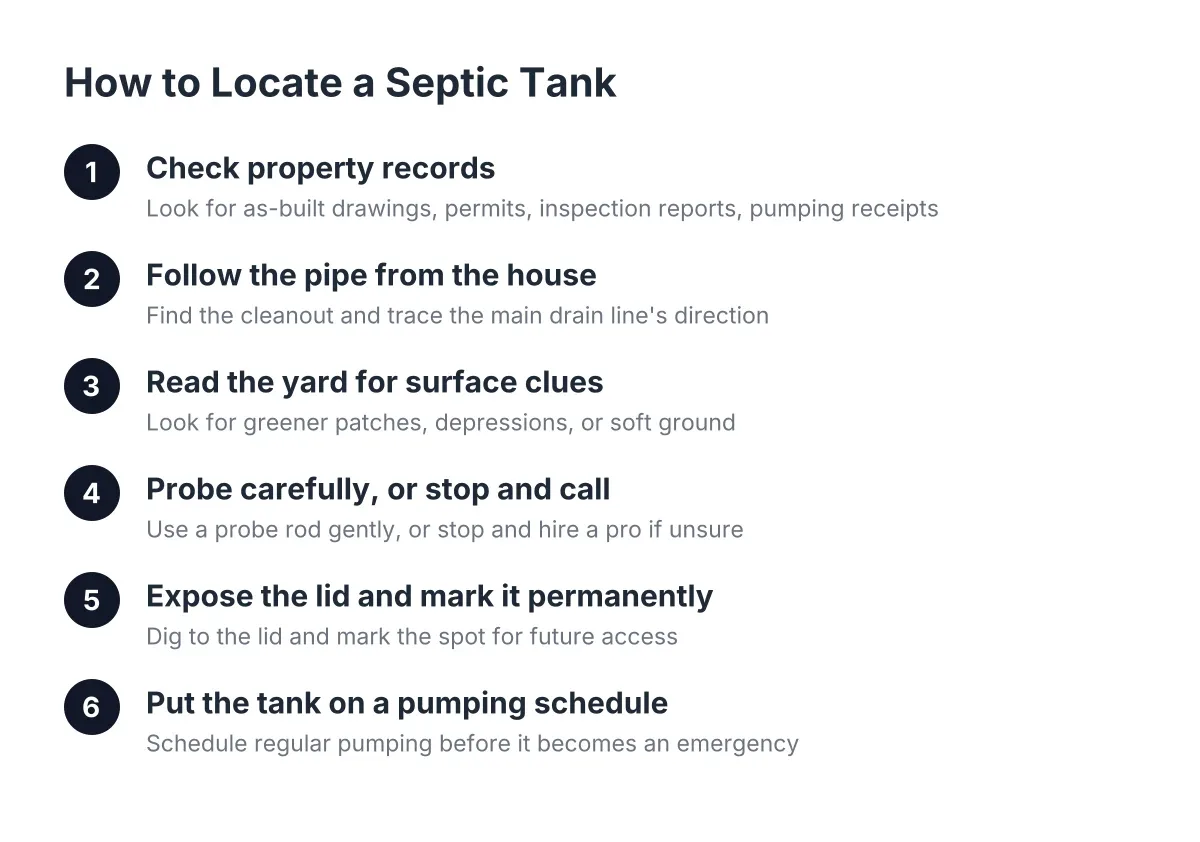
Step 1: Check Your Property Records First
Start with paper before you start with a shovel. Many septic-served properties in the High Desert have records that show exactly where the tank was installed.
Look for these, in this order:
- The property's "as-built" drawing or septic permit, often on file with the San Bernardino County health or environmental agency
- Your home inspection report from when you bought the property
- Prior pumping receipts or invoices, which sometimes note the tank location or access notes
- The seller's disclosure packet, if you bought the rental recently
For a small landlord, this step pays off twice. First, it may hand you the location for free. Second, it builds the paper trail you want anyway; a folder with the permit, the as-built, and pumping receipts is exactly what you need for habitability questions or a pre-lease turnover.
However, records fail often out here. Older Hesperia properties may predate good record keeping, and additions or regrading can make an old drawing useless. If the records come up empty or don't match the lot, move to the physical clues.
Step 2: Follow the Pipe From the House
The main sewer line leaves the building in a straight line toward the tank, so the building itself is your best clue. In a crawl space or basement, find where the main drain exits the foundation. Outside, look for a cleanout pipe, which is a capped pipe sticking a few inches out of the ground near the house.
That cleanout matters. A technician who can see a cleanout, or who at least knows the general vicinity of the tank, can trace the pipe and find the tank far faster than one starting blind. Note where it is and which direction the line seems to run.
In addition, keep distance rules in mind while you look. Most local regulations require at least 10 feet between a septic system and the building it serves, according to the Minnesota Pollution Control Agency. So start your search about 10 to 25 feet out from the foundation, in line with the exit point of the drain.
Step 3: Read the Yard for Surface Clues
Next, walk the yard slowly and look at the ground itself. Buried tanks leave hints, especially in High Desert soil where vegetation is sparse.
Watch for:
- A rectangular patch where grass or weeds grow greener or faster than the surrounding dirt
- A shallow depression or a slight mound that doesn't match the rest of the grade
- Concrete lids or risers partially covered by decades of blown sand
- Areas where snow melts first in winter, or where the ground feels softer underfoot
Also rule areas out. Tanks don't sit under driveways, patios, or additions in a properly built system, and the drain field usually sits downhill from the tank. Suppose you own a three-unit rental off Main Street in Hesperia; if the lot slopes toward the back fence, the tank likely sits between the house and that lower ground, on the line you traced in Step 2.
Step 4: Probe Carefully, or Stop and Call
If the clues point to a spot, you can confirm it with a thin metal probe rod pushed gently into the soil. A buried concrete or fiberglass tank feels like a flat, hard surface at a consistent depth, usually within a couple feet of grade.
Be careful here. Probing hard can crack an older concrete lid or damage inlet and outlet pipes, and the connection points where pipe meets tank are the vulnerable spots. If the ground fights you, or you have no confident target area, stop. This is the point where a professional septic tank locating service earns its fee, and it is also the honest limitation of the do-it-yourself route: guessing wrong and digging random holes costs more than paying someone with the right tools.
When to Call a Professional for Septic Tank Locating
A professional locating crew traces the sewer line from the house with detection equipment, pinpoints the tank and its lids, and marks them so pumping access is immediate. Some methods involve flushing a small transmitter that gets detected from the surface. The result is a marked, confirmed location instead of an educated guess.
For a rental owner, the practical benefit is that this happens without you on site. The crew works from the cleanout and the yard; your tenant doesn't need to do anything beyond letting them access the property. Ask for the location to be documented, even a simple photo with measurements from two corners of the house, so it goes in your property file.
Septic Tank Locating Service Costs and Savings
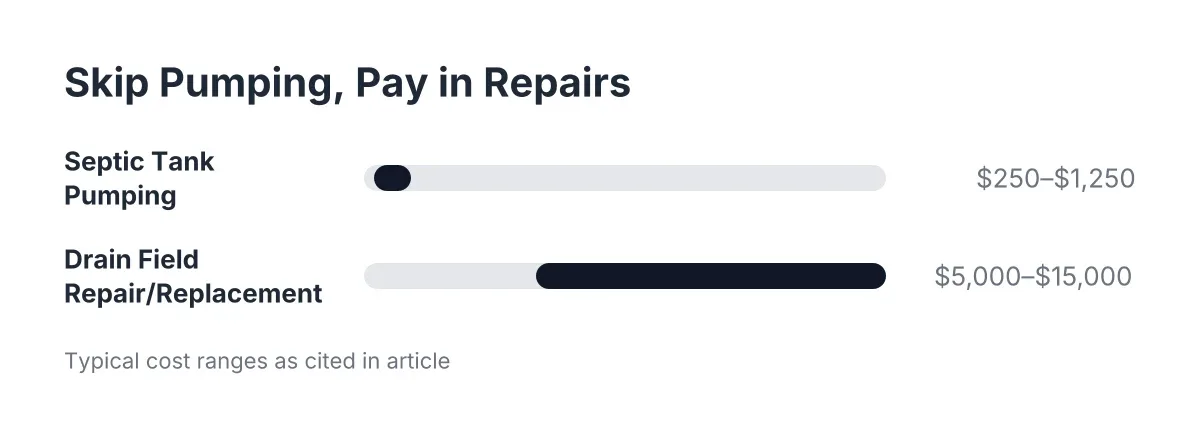
Locating a septic tank is a modest cost compared to pumping, and often a company will fold it into a pumping visit. As a rough illustrative range, standalone locating might run from under a hundred dollars to a few hundred if the line is long or the tank is deep. Compare that against the pumping itself, which averages $427 nationally with a typical range of $250 to $1,250 depending on tank size and location, according to Angi. Paying a small locating fee once beats paying a dig-out surcharge on every future visit.
There is a bigger number to keep in mind too. The EPA estimates septic repair or replacement typically costs $5,000 to $15,000, and a septic pump replacement cost on a system with a pump chamber lands in serious money as well. Damage from digging blind, or from a contractor trenching over an unmarked tank during a fence or pool project, is exactly how those bills happen.
Step 5: Expose the Lid and Mark It Permanently
Once the tank is found, dig down to the access lid and either install a riser or mark the spot so nobody has to search again. A riser brings the lid to grade level, which means every future pumping visit starts immediately, with no digging fee.
At minimum, do this:
- Measure from two fixed points on the building to the lid, and write it down.
- Take photos showing the lid relative to the house and fences.
- Sketch the tank and drain field on a simple site map for each rental you own.
- Share the map with your property manager or a trusted tenant contact.
As a result, when a tenant calls about slow drains while you're two hours away, you can tell the septic crew exactly where to go. That is the difference between a supervised project and a service call that handles itself.
Step 6: Put the Tank on a Schedule Before It Becomes an Emergency
Locating the tank is the setup; a service schedule is the payoff. The EPA recommends a professional inspection at least every three years for the average household, and Penn State Extension notes that an active family of four generally needs the tank pumped every two to three years. A rental with steady occupancy behaves like an active household, so plan accordingly.
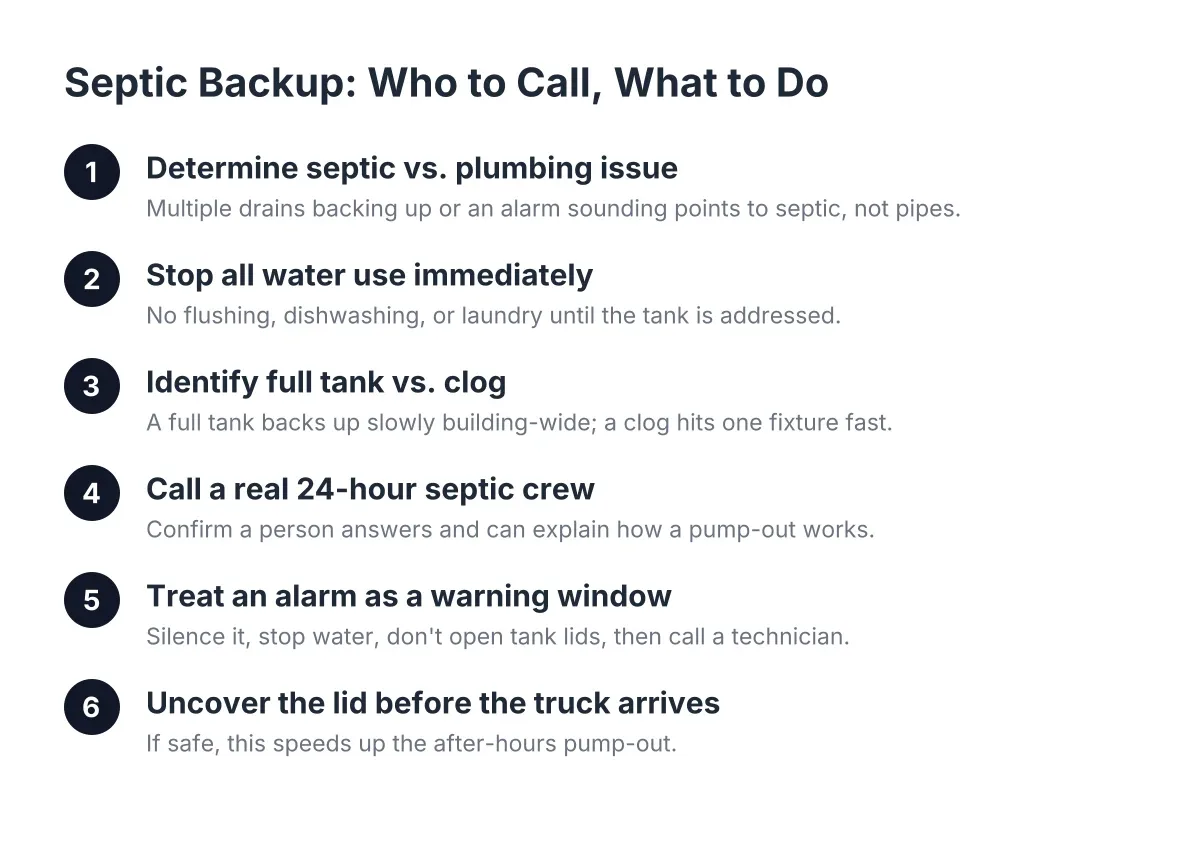
Therefore, treat the first pumping after locating as your baseline. The crew can tell you how full the tank was and suggest an interval for that property. From then on, septic tank pumping becomes a calendar item instead of a tenant complaint, and an emergency septic service call becomes something you rarely need. If a backup does happen, call a septic professional first to diagnose it; a plumber only comes into play if the problem turns out to be inside the building's own plumbing.
One more scenario worth naming. Say you're planning a shed, carport, or paving project at one of your Hesperia units in 2026. Confirm the tank and drain field location before any equipment rolls in. Knowing exactly where the system sits can prevent thousands of dollars in damage from a single misplaced trench.
The Bottom Line for Hesperia Property Owners
A septic tank locating service is cheap insurance against an expensive night. Records, the pipe path, and yard clues will find many tanks; professional locating handles the rest without guesswork. Once the tank is found, marked, and on a pumping schedule, an emergency stops being a scramble. The crew shows up, goes straight to the lid, and pumps, whether or not you're anywhere near the property.
If you need your septic tank serviced, Hesperia Septic can help.
Prefer to talk it through? Call (760) 249-7872 — a quick call is usually the fastest way to get a straight answer for your situation.