Emergency Plumber Near Me? For Septic Backups in Hesperia, Call the Right Crew First
Sewage is backing up, the septic alarm is going off, or a tenant just called about a smell you cannot ignore. The first instinct is to search for an emergency plumber near me and call whoever answers. Here is the problem: if your Hesperia property is on a septic system, a plumber is often the wrong first call. When you need a septic backup emergency call, you need someone trained in septic systems, not just pipes. Plumbers work on the pipes inside the building. A backed-up septic tank sits outside, underground, and no amount of snaking a drain line will empty it.
This matters even more if you are not a homeowner standing in the mess. Maybe you manage a restaurant and the health inspector flagged your grease trap. Maybe you own a rental in Hesperia and your tenant is texting photos of a backed-up shower at 9 p.m. Maybe you run an RV park and a holding tank is full with guests checked in. In all of those cases, you need someone who answers the phone after hours, tells you what to do right now, and shows up with a pump truck, not just a wrench.
Below are eight things to know before you make that call. They will save you time, money, and at least one wrong dispatch.
1. When to Call for a Septic Backup Emergency vs. Regular Plumbing
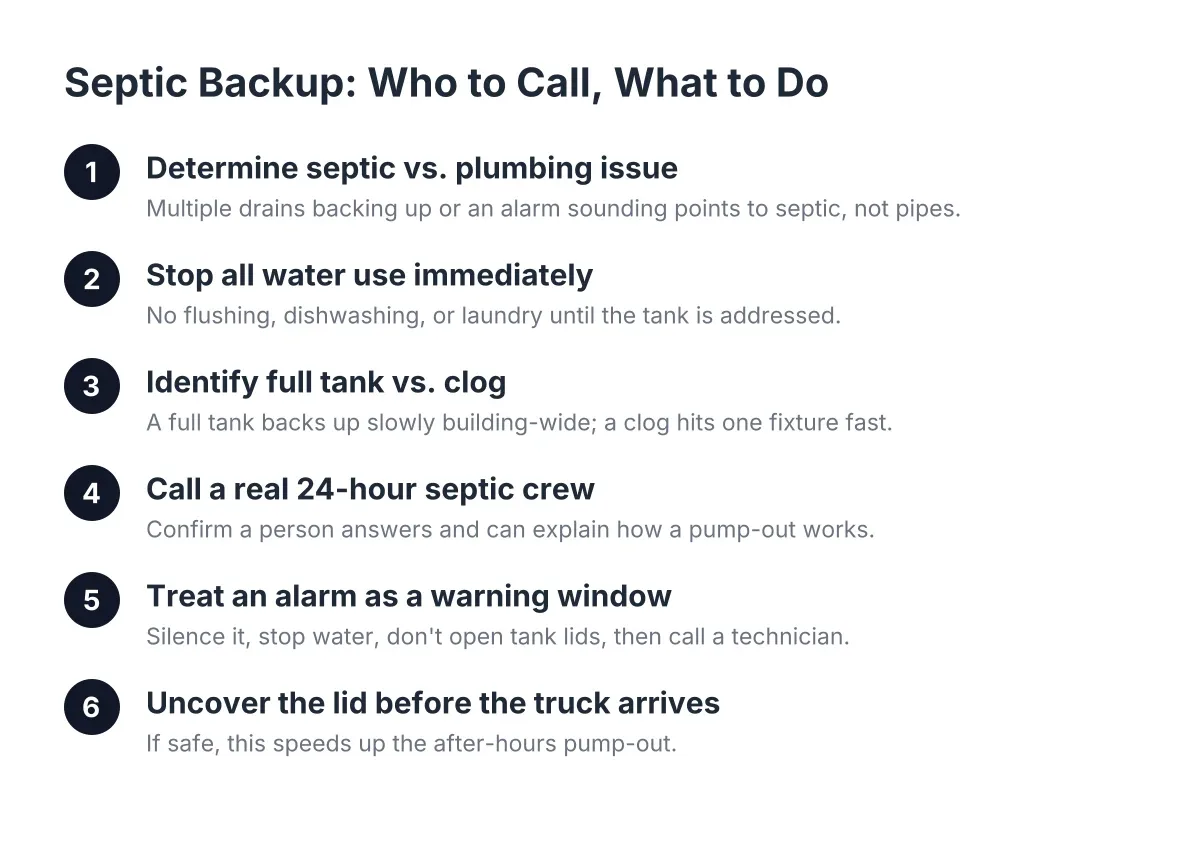
The fastest way to waste an after-hours service fee is to send the wrong trade. If the property is on septic, and much of Hesperia and the High Desert is, a septic service should diagnose the problem first. A plumber only enters the picture if the issue turns out to be inside the building's own plumbing.
Here is a quick way to sort it:
- Multiple drains slow or backing up at once: likely the septic tank or the line to it. Call a septic crew.
- One fixture clogged, everything else fine: likely an interior pipe problem. A plumber can handle that.
- Septic alarm sounding or a red light on the control panel: septic system, full stop. Stop water use and call a septic technician.
- Sewage or standing water over the tank or drain field: septic. Do not let anyone walk through it.
Therefore, before you dial anyone, tell them the property is on a septic system. That one sentence changes the whole diagnostic approach, and a good dispatcher will route you correctly from the first call.
2. Stop the water before you stop anything else
A septic backup is driven by water going into a tank that has nowhere to put it. The single most effective thing you can do in the first five minutes costs nothing: stop adding water. No flushing, no dishwashing, no laundry, no running the bar sink.
For a business, that means telling staff immediately. Suppose you run a small commercial kitchen in Hesperia and the floor drain starts gurgling during dinner service. In that scenario, the move is to pull the dish pit offline, switch to disposables where you can, and keep every drop of water out of the drain until the tank is pumped. That buys you hours instead of minutes.
For a rental, call the tenant and give them the same instruction. It is the only temporary fix that reliably works. Additives, plunging, and hot water flushes do not empty a full tank; only septic tank pumping does.
3. Full or clogged? The answer changes who you call
Wondering whether your septic tank is full or clogged is the right question, because the fix is different for each. A full tank backs up slowly and affects the whole building; the lowest drains go first, and you may smell sewage outside near the tank. A clog usually hits one line or one fixture and comes on fast.
However, most emergency backup calls trace back to the same root cause: the tank went too long without pumping, and sludge built up until wastewater had nowhere to go. If you cannot remember the last pump-out, treat "full" as the working theory. As a general reference for when to pump a septic tank, Penn State Extension notes that an active family of four generally needs pumping every two to three years. A busy restaurant grease trap fills far faster than that and runs on its own schedule.
4. What "24-hour septic service" should actually mean
Plenty of listings promise around-the-clock help. The useful test is simpler: does a person answer the phone at night, and can they explain what happens next? Real emergency septic service starts with calm triage over the phone. A crew that knows the work will ask where the backup is showing, whether the alarm is on, and whether you know where the tank is, before a truck ever rolls.
Be cautious with national call centers that rank for emergency plumber near me searches but have no truck within a hundred miles of Hesperia. They sell your call to whoever bids on it. A local septic crew, by contrast, knows High Desert soil, knows how deep tanks sit out here, and does not need directions to your street.
As of 2026, the smartest filter is a short phone conversation. If the person on the line cannot describe how a pump-out works, keep dialing.
5. A septic alarm is a warning, not yet a disaster
If your septic alarm is going off, the system is telling you the water level is too high, usually because a pump failed or the tank is at capacity. Treat a red alarm light as urgent: stop water use immediately and call a septic technician. The alarm exists to give you a window before sewage backs up into the building. Use that window.
For example, say a landlord gets a tenant call about a beeping box on the side of a Hesperia rental. The right instructions to give over the phone are short: silence the alarm if there is a button, stop all water use, and do not open any tank lids. Then the landlord calls a septic crew, not a general handyman, and never has to drive out at midnight.
For non-standard systems, the maintenance bar is higher. According to the U.S. Environmental Protection Agency, alternative septic systems with float switches, pumps, or mechanical parts should generally be inspected once a year.
6. Grease traps and holding tanks: when to place a septic backup emergency call
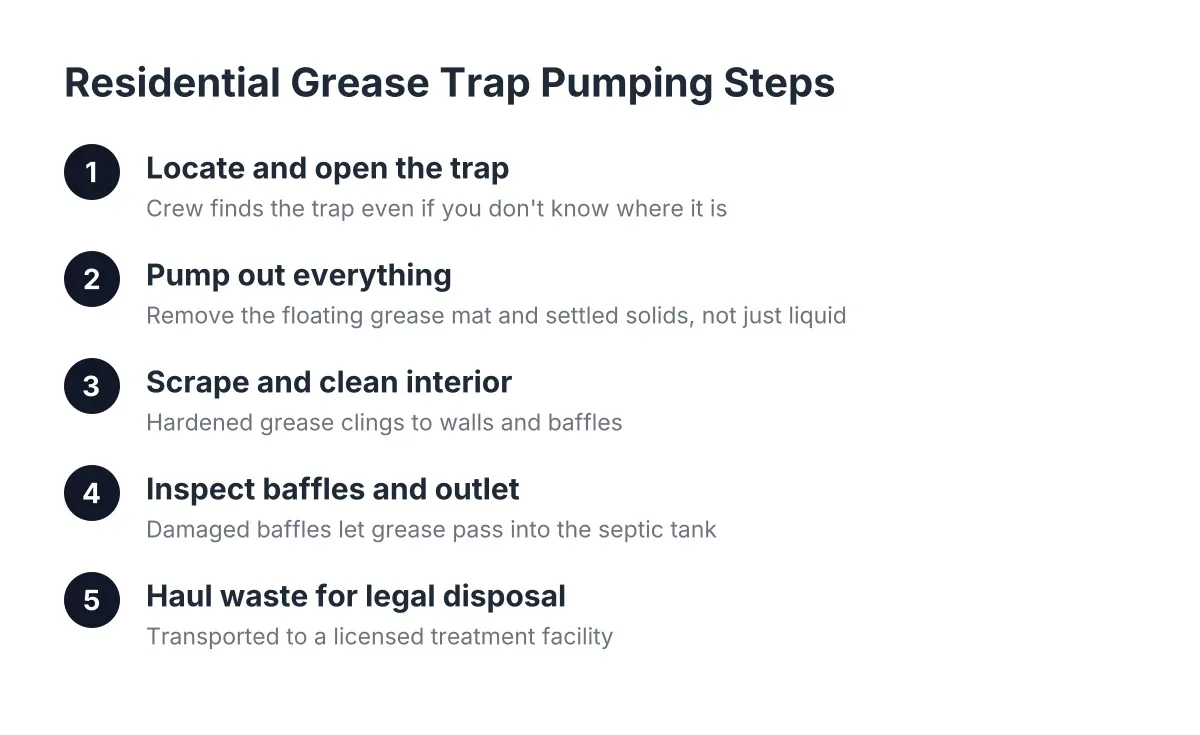
Backup emergencies are not only residential. A grease trap that overflows during service can shut a kitchen down, and a health inspector's citation puts you on a clock whether the trap is technically "overflowing" or not. The same goes for RV holding tanks at a park with guests on site. These are pump-truck jobs, and the crew that handles septic tank pumping in Hesperia typically handles grease trap pumping and RV or holding tank pump-outs with the same equipment.
In addition, ask any service you call for documentation of proper waste disposal. Pumped waste gets trucked to a treatment facility rather than processed on site, according to New Hampshire Department of Environmental Services, and the paper trail matters if an inspector asks. For a restaurant or RV park, that receipt is your compliance record.
If your operation needs pumping on a repeating schedule, say so on the first call. Turning an emergency into a standing monthly or quarterly service is how you stop having this fire drill twice a year. A timely septic backup emergency call that leads to preventive maintenance saves far more than the cost of the service itself.
7. Dig up the lid before the truck arrives, if you safely can
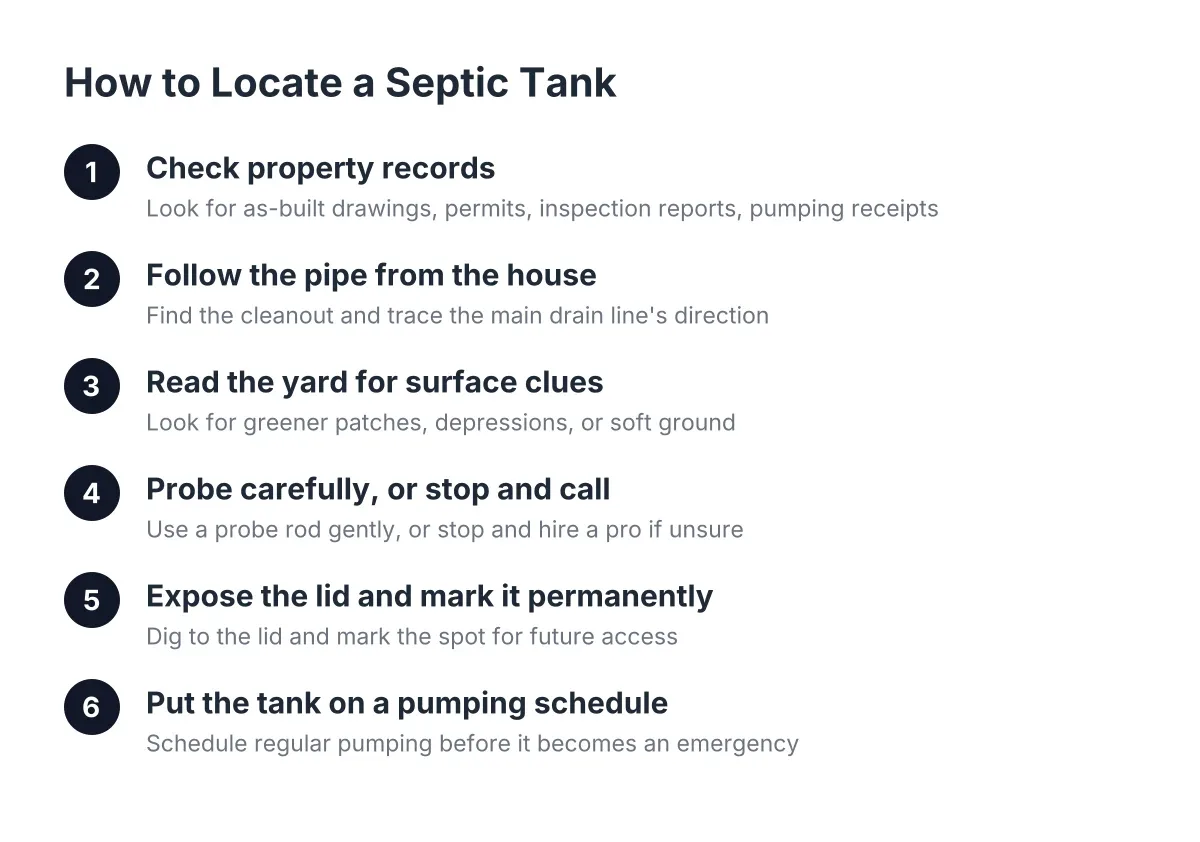
Locating a buried septic tank can eat a surprising amount of an emergency visit. If you know where your tank is, and the lid is under a foot of dirt rather than concrete, exposing it before the crew arrives shortens the job. Property records, a previous pumping receipt, or the cleanout pipe location can all point you to it.
However, know your limits here. Never open the lid yourself; the gases inside a septic tank are dangerous, and an open tank is a fall hazard. If you do not know where the tank is, say that on the phone. Septic tank locating is a normal part of the service, and guessing with a shovel in the dark helps no one.
8. Why the after-hours pump-out is still the cheap option
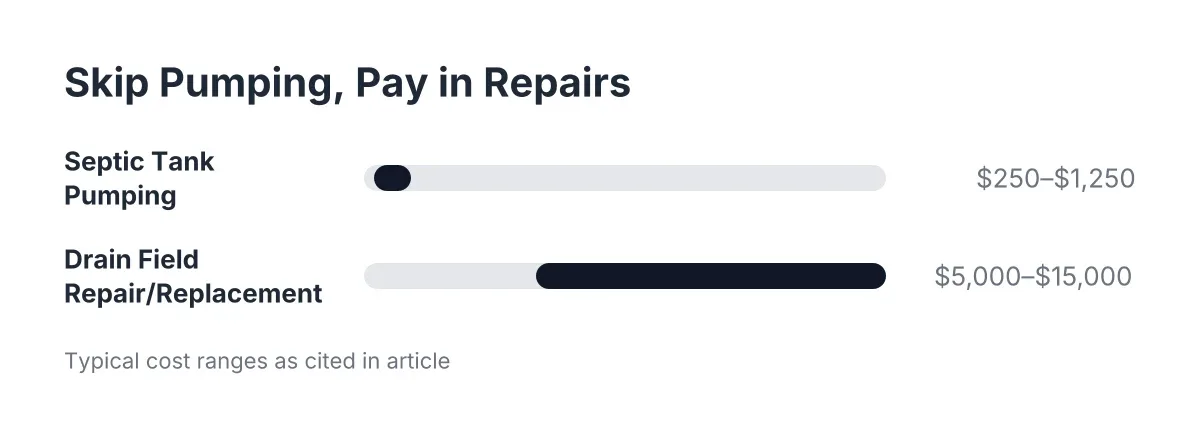
Emergency service costs more than a scheduled visit, and that stings at 11 p.m. Keep the alternative in view. According to Angi, routine septic tank pumping averages $427, with a range of $250 to $1,250 or more depending on tank size and location. Compare that with what happens when a failing system goes unaddressed: the U.S. Environmental Protection Agency estimates septic repair or replacement typically runs $5,000 to $15,000.
Therefore, even a premium after-hours pump-out is the inexpensive outcome. The expensive outcome is a flooded drain field, a contaminated crawl space, or a restaurant closed by the county. More than one in five U.S. households rely on septic or small cluster systems, according to the U.S. Environmental Protection Agency, and the ones that avoid five-figure repairs are the ones that treat backups as urgent and maintenance as routine. The EPA recommends a professional inspection at least once every three years for the average household system.
The short version for the 2 a.m. search
When you are typing emergency plumber near me with sewage rising in a drain, here is the whole playbook in one list:
- Stop all water use in the building immediately.
- Figure out if it is one fixture (plumber) or the whole system (septic crew).
- Tell whoever you call that the property is on septic, and describe what you see.
- Do not open tank lids or walk through standing sewage.
- If you can safely expose the tank lid, do it; if not, tell the crew.
- Get a disposal receipt if you need it for compliance.
- Before the truck leaves, ask about a maintenance schedule so this does not happen again.
A backed-up septic system in Hesperia is a solvable problem, usually within hours, when the right local crew answers the phone. The mistake is not the backup itself; almost every tank backs up eventually if it goes unpumped long enough. The mistake is spending the first hour of the emergency talking to a call center three states away. Know who handles septic in your area before you need them, and the worst night of your property's year becomes one phone call and one pump truck.
If you need your septic tank serviced, Hesperia Septic can help.
Prefer to talk it through? Call (760) 249-7872 — a quick call is usually the fastest way to get a straight answer for your situation.